
You're probably staring at a growing stack of boxes right now. One room is half packed, another is still untouched, and the kitchen drawer full of random cords, batteries, and takeout menus somehow feels impossible to finish. That's how most moves start in Ontario. Not with one big dramatic task, but with dozens of small decisions that pile up fast.
The stress gets worse when the move itself has limits around it. A Toronto condo may require elevator booking and loading-dock timing. A family move in Whitby often means a full garage, basement shelves, sports gear, and furniture that won't go out in one trip. A downsizing move in Durham Region can be even harder because the main challenge isn't lifting boxes. It's deciding what still fits your next chapter.
That's where professional packing & moving services help. Good movers don't just carry furniture. They create order, reduce last-minute scrambling, and handle the parts of the move that usually cause delays, damage, or burnout. If you want a move that feels organised instead of chaotic, packing support is often the difference.
Table of Contents
- The Overwhelming Task of Packing for a Move
- Decoding Packing Services What Is Actually Included
- The True Cost of Professional Packing in Ontario
- Your Moving Timeline and Packing Checklist
- Special Considerations for Your Ontario Move
- DIY Packing vs Hiring Professional Movers
- Make Your Next Move Your Easiest Move
The Overwhelming Task of Packing for a Move
By the third night of packing, the kitchen table is covered in tape, half-filled boxes, and the pile of items nobody knows what to do with. That is the point where a move starts to feel less like a project and more like a second full-time job.

Why packing feels bigger than it should
Packing takes longer than people expect because it is not only about putting items in boxes. It is constant sorting, protecting, labeling, and deciding what still deserves space in the next home. A basement shelf can hold ten years of delayed decisions.
Around Durham Region, that usually means more than bedrooms and dishes. A Whitby family home often has sports gear in the garage, seasonal bins in the basement, and patio furniture out back. In Toronto condos, the challenge shifts. There may be fewer square feet, but tighter elevator bookings, loading rules, and shorter move windows leave very little margin for a slow packing job.
Seniors and downsizers feel this pressure differently. The job is often less about speed and more about judgment. What stays, what goes to family, what gets donated, and what should be removed before moving day all need careful handling. Packing and decluttering are tied together, which is why moves like these often go better with one team managing both.
Packing gets easier when every item has a decision, every room has a plan, and the unwanted pieces are dealt with before the truck shows up.
What professional help changes
Professional packing services replace guesswork with order. Rooms are packed in sequence, fragile items are wrapped for transport, and boxes are labeled so the unload makes sense at the other end. That matters in a Toronto condo where delays can cost you your booked elevator slot, and in a larger Oshawa or Ajax home where one disorganized room can slow down the whole day.
The true benefit is not just labour. It is judgment. Experienced crews know when a lamp needs a carton instead of a blanket, when a drawer can stay loaded, and when it is smarter to remove clutter than pay to move it across Ontario. At On The Move, that often means helping clients pack what should travel, set aside what can be donated, and remove what no longer belongs in the move at all.
For anyone trying to reduce stress before moving day, our guide for your smooth move explains how packing support fits into the full relocation process.
A lot of people start out planning to do every box themselves. After a week of half-packed closets and mounting deadlines, many decide they want help with the rooms that take the most time, the items they are worried about breaking, or the clear-out work that has to happen before packing can even begin. That is usually the turning point between a chaotic move and one that feels under control.
Decoding Packing Services What Is Actually Included
It's often assumed that “packing service” means one expensive all-in package. It doesn't. Think of it more like a menu. You can hand over the whole job, only the difficult parts, or just the items you really don't want to risk packing yourself.
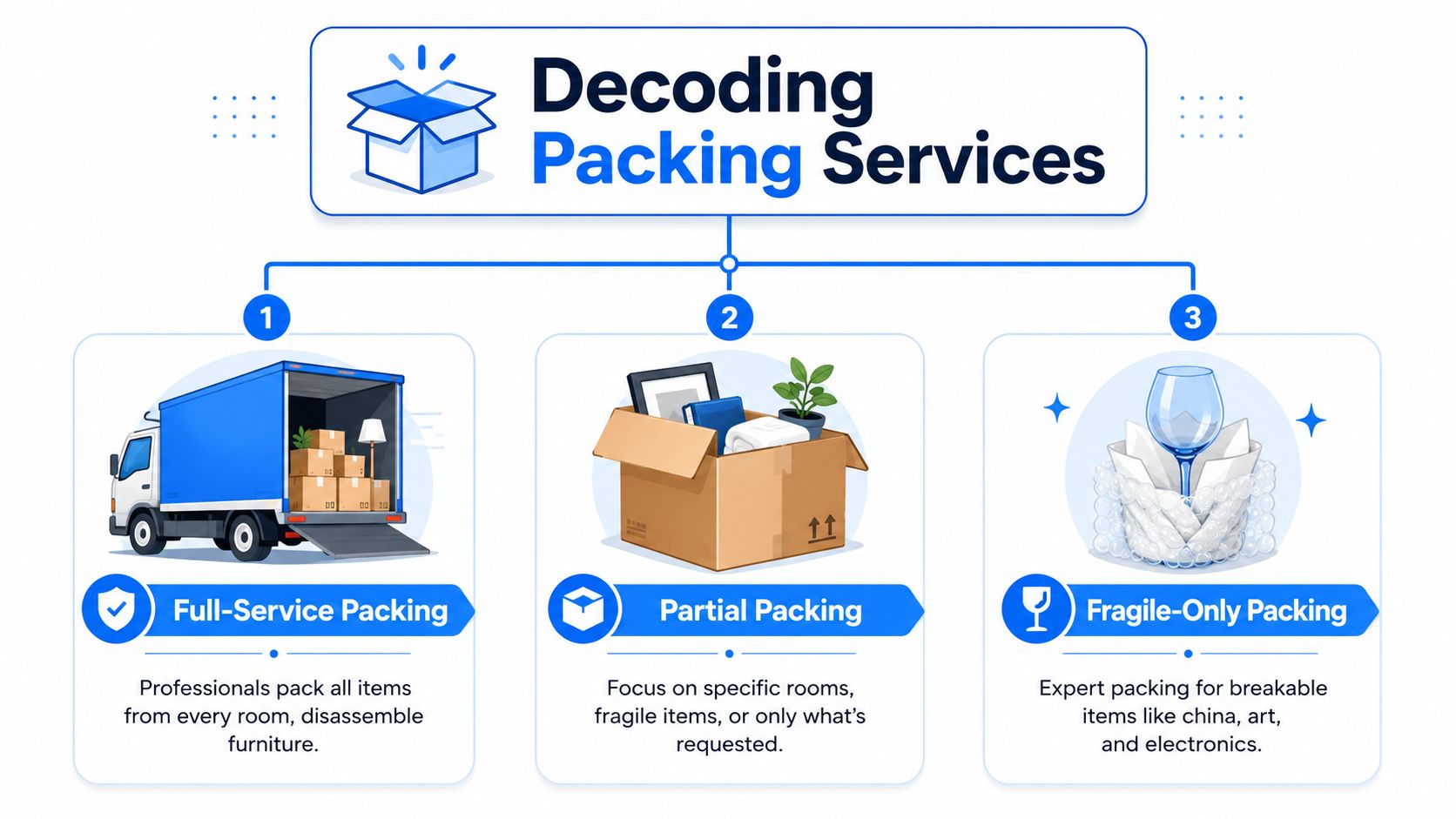
Full-service packing
This is the option for busy households, tight timelines, or moves where you prefer not to spend evenings wrapping dishes and sorting closets. The crew packs the contents of the home room by room, protects breakables, and often handles furniture disassembly where needed.
It's usually the right fit for:
- Large family homes: More rooms, more storage areas, more loose items.
- Time-sensitive moves: Possession date is fixed and your schedule is already full.
- High-stress relocations: Job changes, separations, estate moves, or back-to-back closings.
With full-service packing, materials matter as much as labour. Proper boxes, wrapping paper, cushioning, mattress bags, and labels make the move smoother from start to finish.
Partial packing
Partial packing is the practical middle ground. You pack the simpler items yourself and leave selected rooms or categories to the movers. A lot of Ontario clients choose this for kitchens, glassware, artwork, electronics, or storage areas they don't want to tackle alone.
This works well if:
- You want to control the budget: You're doing some of the work, but not all of it.
- You've started packing already: The easy rooms are done, but the hard ones remain.
- Your move has building restrictions: Better organisation helps keep the move inside booked access times.
For a closer look at what this can include, this guide for your seamless move is useful if you're comparing levels of service.
Practical rule: If you keep postponing one room over and over, that room probably belongs in a partial packing request.
Fragile-only packing
Some people are happy to pack clothes and books but don't want to touch stemware, mirrors, framed art, televisions, or delicate decor. That's where fragile-only packing makes sense.
A fragile-only service usually focuses on:
- Kitchen breakables: Glasses, plates, serving dishes, small appliances.
- Display items: Artwork, lamps, vases, collectibles.
- Sensitive electronics: Monitors, speakers, game systems, office tech.
This option gives you expert handling without committing to a full-service move. It's often the smartest choice for condo residents, professionals with limited time, or anyone who knows exactly which items make them nervous.
The True Cost of Professional Packing in Ontario
Cost is usually the first question, and it should be. People don't want surprises on moving day. They want to know what they're paying for and why one quote can look very different from another.
What actually affects the quote
Packing quotes aren't built from room count alone. The final number usually depends on labour time, how many packers are assigned, how much material is required, and what kind of items are in the home. A clean townhouse with standard furniture packs differently than a condo full of fragile decor or a detached home with a packed basement and garage.
A few common pricing drivers include:
- Home size and layout: More rooms usually mean more sorting and wrapping.
- Item type: Dishes, glass, electronics, artwork, and mirrors take longer than linens or books.
- Access: Stairs, long carries, tight hallways, and building rules can slow the work.
- Scope: Full packing, partial packing, unpacking, and junk removal all change the labour plan.
The moving industry itself is a major market. IBISWorld projects the U.S. moving services industry at $25.7 billion in 2026 across 9,430 businesses, and its industry research also notes that over half of moves happen within the same county while about 80% occur within the same state according to IBISWorld's moving services industry outlook. The Ontario takeaway is simple. Many moves are local or regional, but they still involve enough labour and logistics to justify professional support when access or timing gets complicated.
Why condo logistics change the price
Quotes frequently become problematic. For example, condo moves in Toronto aren't priced properly if the estimator ignores elevator booking, loading-dock coordination, and narrow moving windows. Those “soft costs” can change the job more than square footage does.
In practical terms, a condo move can become expensive when:
- The elevator booking is short: The crew has to move fast and stay tightly organised.
- Parking is difficult: Time gets lost before the first box is even loaded.
- Building rules are strict: Miss the booking window and the move gets harder quickly.
A recent Ontario-focused overview of packing and moving service questions points out that parking, elevator reservations, and labour rules can materially change the quote, especially in condo-heavy cities like Toronto, and that a well-planned partial pack can sometimes make more sense than full-service packing in tight-access buildings according to this Ontario packing and moving discussion.
When paying for packing makes sense
Professional packing makes the most sense when you're buying time, reducing risk, or protecting a move window that can't slip. It's not always about finding the cheapest line item. It's about preventing the expensive mess that happens when packing runs late, labels are inconsistent, or the elevator booking expires before the truck is done.
That's why many clients in Durham and Toronto choose help with the hardest parts only. The right package isn't always “everything.” It's the service level that prevents delays and keeps the move controlled. If you're weighing pricing and service options, this guide to hiring movers in Durham can help you ask better questions before you book.
Your Moving Timeline and Packing Checklist
A move gets easier when it's broken into stages. Most packing problems come from doing too much too late. A simple timeline keeps the work manageable and helps you avoid the last-week rush.
Early planning also makes it easier to secure moving dates, especially around month-end, school breaks, and busy summer weekends. This visual gives you the basic flow.
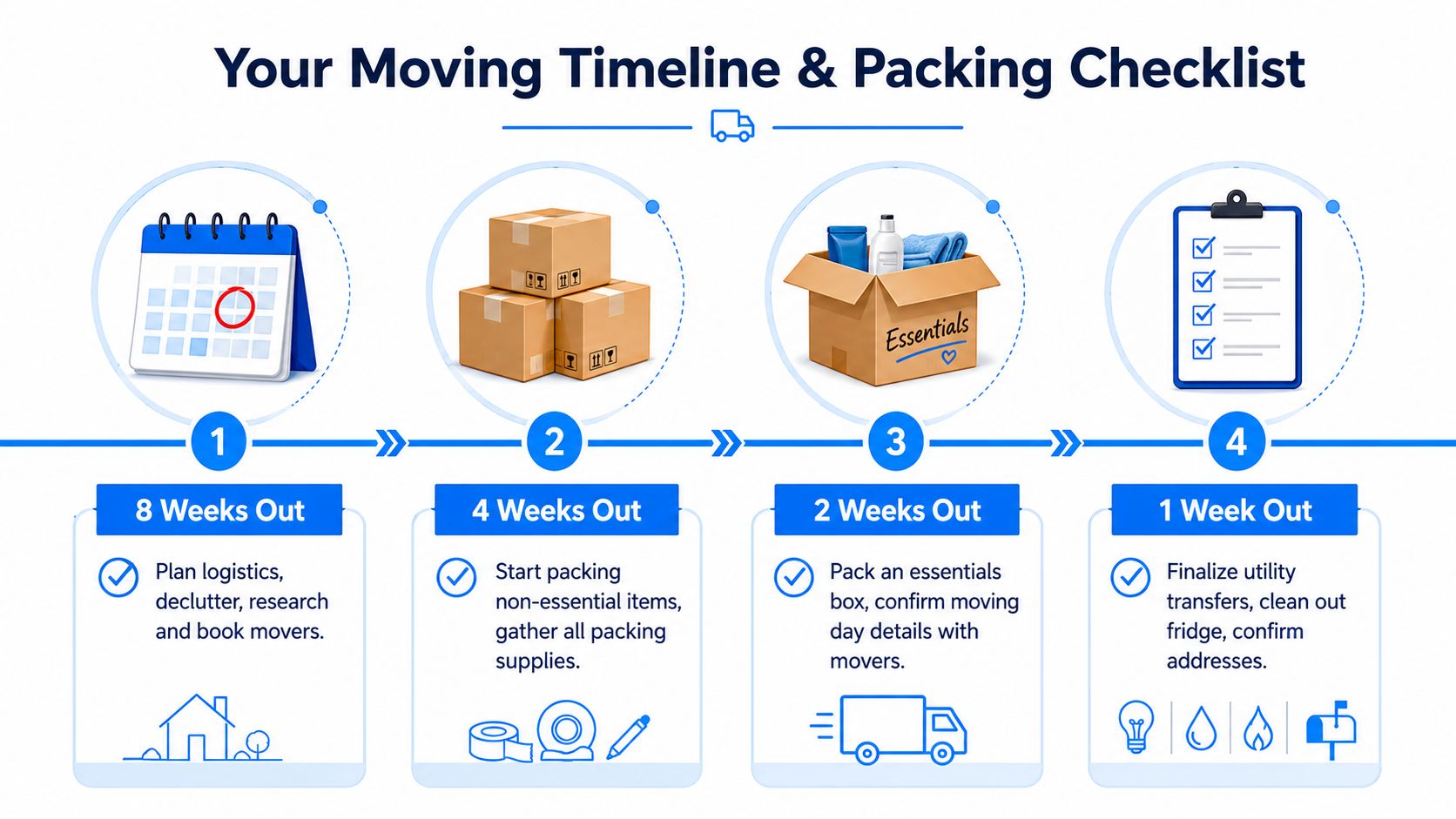
Eight weeks out
Start with decisions, not boxes. This is the best time to sort what's staying, what's going, and what shouldn't make the move at all.
Focus on:
- Decluttering storage areas: Basement shelves, closets, garage racks, spare-room furniture.
- Booking movers early: Lock in the date and discuss whether you need packing help.
- Checking building logistics: If you're moving to or from a condo, confirm move rules now.
If the move involves seniors, estate items, or a major downsize, this is also the right stage to line up junk removal or donation plans.
Four weeks out
Start packing what you won't need in daily life. Seasonal decor, extra linens, books, collectibles, and off-season clothing should already be moving into boxes.
A few habits help a lot here:
- Pack by room: Don't mix bathroom, kitchen, and office items just to fill space.
- Label for the destination room: “Kitchen” is better than “misc.”
- Keep hardware together: Screws, brackets, and remote controls should stay with the furniture or electronics they belong to.
If you know you'll want help, don't wait until the final week. This is usually the point where families realise they need extra hands. For a fuller planning list, you can get ready for your Ontario move with a room-by-room checklist.
A short walkthrough can also help you visualise the order of tasks before the move date:
Two weeks out
This is the phase where homes start feeling half packed and slightly inconvenient. That's normal. The goal now is to finish the non-essentials and leave only true daily-use items out.
Create:
- An essentials box: Toiletries, chargers, medications, basic tools, paper towel, coffee supplies.
- A document file: IDs, lease or closing papers, keys, booking confirmations.
- A “do not load” zone: Items that stay with you in the car.
The best label on moving day is the one you understand at a glance when you're tired.
One week out
The final week is for control, not panic. Your fridge should be getting emptier, utility transfers should be confirmed, and your remaining packing should be limited to the last daily-use items.
Use this final check:
- Confirm addresses and arrival details
- Check weather and access plans
- Finish laundry and empty hampers
- Set aside cleaning supplies
- Walk every room before move day
When clients follow a timeline like this, moving day feels smaller. There's less guesswork, fewer loose items, and fewer frantic calls about missing screws, keys, or labels.
Special Considerations for Your Ontario Move
A move into a Toronto condo can go sideways before the first box leaves the truck. The elevator window is short, the loading dock may be shared, and building staff will not extend your booking because a few boxes are still loose or unlabeled. In a Whitby house move, the pressure is different. The challenge is volume, hidden storage, and all the things that do not show up on a quick walkthrough. Senior and downsizing moves add another layer again, because the hard decisions usually happen before packing starts.

Toronto condo moves
Condo moves reward preparation and punish delays. In Toronto, that usually means confirming elevator reservations, checking certificate of insurance requirements, measuring tight hallways, and packing in a way that keeps the crew moving without stopping to sort mixed boxes in the lobby.
Good packing matters here because time matters. Standard labels, consistent box sizes, and proper wrapping help the unload stay organized and help avoid missed elevator slots. Many condo clients choose partial packing for glassware, kitchen breakables, lamps, artwork, and electronics, then pack clothing and linens themselves. That approach often keeps costs under control without creating confusion on move day.
A practical condo plan should cover:
- Elevator and loading area bookings
- Building rules for moving hours and protection pads
- Clear labels by room and priority
- Smaller box counts for easier elevator handling
- A backup plan for traffic, parking, and key pickup
Family homes in Whitby, Ajax and Oshawa
Detached homes across Durham Region usually carry more than people expect. The basement workshop, garage shelves, patio furniture, spare freezer, sports gear, and office equipment all add labour and packing time. The move looks straightforward until the crew reaches the items that were easy to ignore during the estimate.
The best approach is to break the house into work zones and deal with the messiest storage areas early. Basements and garages are usually slower than bedrooms. Kitchens need care because they combine fragile dishes, odd shapes, and heavy small appliances. Kids' rooms can be packed earlier than many parents think, as long as a small bin of daily favourites stays out until the end.
For local households that want help without handing over every task, On The Move's packing services fit well with the nature of Durham moves. Packing, move-day coordination, and junk removal can be handled together, which is often the difference between a controlled move and a house full of last-minute decisions.
Seniors and downsizing moves
Downsizing is rarely a packing problem alone. It is a sorting problem first.
A senior move from a long-time Oshawa or Pickering home into a smaller condo or retirement residence usually involves furniture that will not fit, sentimental items that need time, and family members trying to help while balancing work and distance. Rushing that process creates stress fast. A calmer plan gives space for keep, donate, sell, and remove decisions before boxes start piling up.
The moves that go well usually include:
- A sorting schedule before packing starts
- Clear decisions on what is going to the new home
- Help removing furniture and unwanted household goods
- Packing that keeps daily routines intact
- Unpacking support so the new space feels usable quickly
This is where a full-service mover earns their keep. Packing and moving are only part of the job. Decluttering, junk removal, donation runs, and a patient room-by-room setup matter just as much for seniors and downsizers in Durham Region.
Office and commercial relocations
Commercial moves have less emotional weight, but they carry a different kind of risk. Lost work time, disconnected equipment, and missing hardware can drag the job out well past move day. A small office in Whitby or a professional suite in Toronto needs an order of operations before anyone starts disconnecting monitors or taking apart desks.
This commercial moving overview explains why office relocations run better with disassembly planning, equipment protection, tracking, and labelled reassembly. That lines up with what crews see on the ground. If cables, screens, fasteners, and workstation parts are packed without a system, setup at the new site slows to a crawl.
The cleanest commercial moves are the ones where every item already has a destination, every workstation is tagged, and unnecessary furniture is removed before moving day instead of after it.
DIY Packing vs Hiring Professional Movers
DIY packing can work. It isn't the wrong choice for everyone. But it helps to compare trade-offs, not just the upfront cash cost.
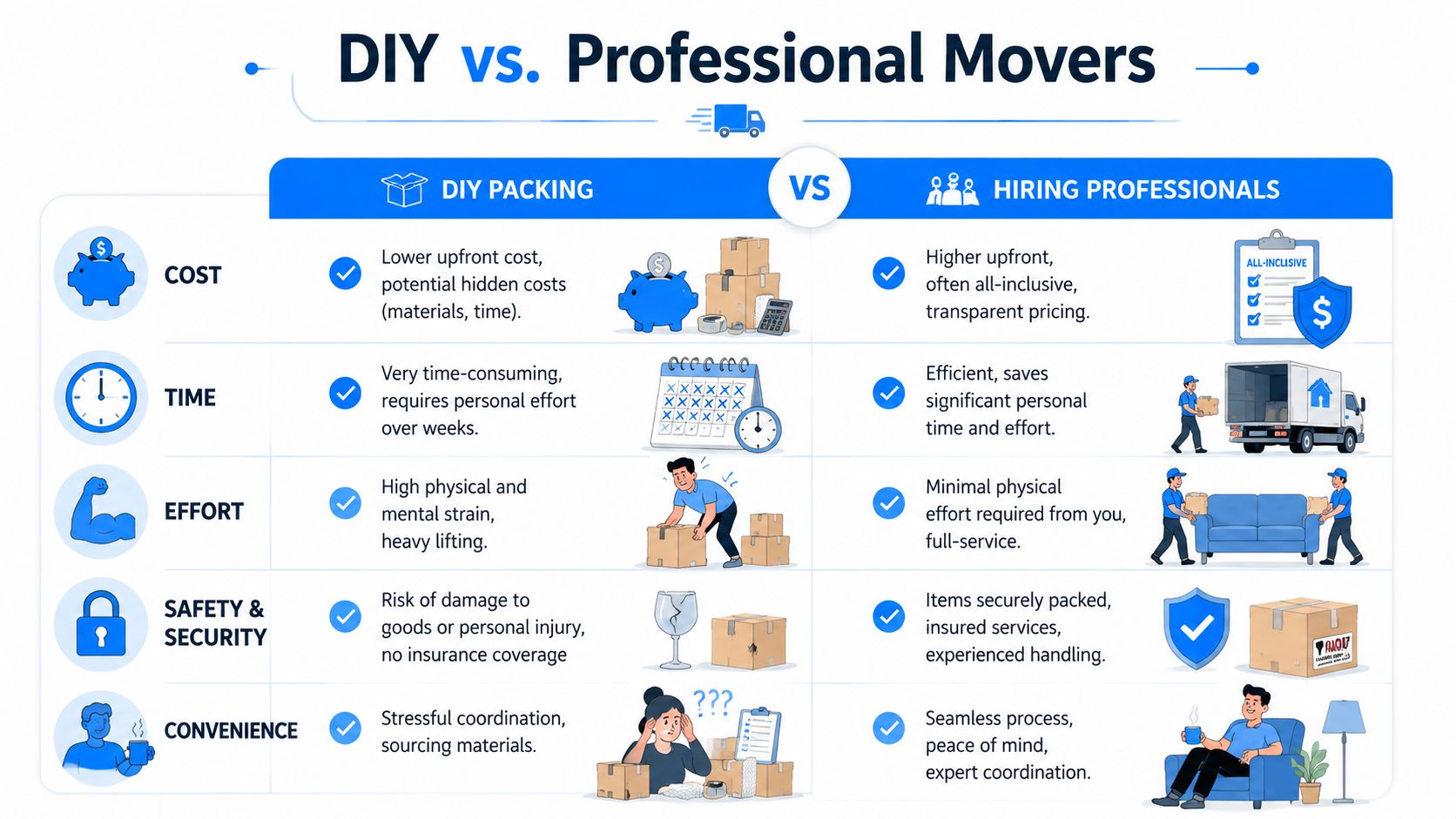
Where DIY works well
DIY usually makes sense when the move is small, flexible, and low-risk. If you're leaving a one-bedroom apartment in Pickering, have minimal furniture, and can pack gradually over time, you may be able to manage most of it yourself.
DIY is often reasonable when:
- You have time: You can pack over several weeks without pressure.
- You have few fragile items: Less breakage risk, less specialty wrapping.
- You want full control: Every box is packed and labelled exactly your way.
The catch is that DIY often looks easier at the start than it feels by the end. Materials still need to be sourced. Furniture still needs protection. Someone still has to carry the awkward items.
Where professional help wins
Professional help pays off when time, access, or complexity matter more than doing every task yourself. It also helps when you don't want your evenings consumed by boxes for the next month.
A simple side-by-side view makes the trade-offs clearer:
| Factor | DIY packing | Hiring professionals |
|---|---|---|
| Upfront cost | Lower at first | Higher at first, but usually clearer in scope |
| Time | Evenings and weekends disappear fast | Work is completed much faster |
| Physical effort | Heavy lifting, bending, stairs, repeated trips | Most of the strain is handled for you |
| Damage risk | Depends on your materials and technique | Lower when fragile items are packed properly |
| Stress level | High if the move window is tight | Lower because the process is structured |
If you're comparing service options in the city, Movers in toronto, toronto moving company is one place to review local help for condo and urban moves.
The cheapest move on paper can become the most expensive one in lost time, damaged items, and pure exhaustion.
Fully insured and bonded movers also change the peace-of-mind equation. If you're moving a household, a home office, or a lifetime of keepsakes, that protection matters. So do simple pricing details. Affordable rates are easier to trust when there are no truck or fuel fees, free supplies are included, and the tax is already covered.
Make Your Next Move Your Easiest Move
Packing doesn't have to take over your life. The right packing & moving services give you options. You can book full-service help, get support for the rooms that always slow people down, or bring in professionals for fragile items, condo logistics, furniture disassembly, junk removal, or downsizing support.
That flexibility matters in Ontario because no two moves look the same. A condo move in Toronto has a different pressure than a family move in Whitby. A senior move in Durham Region needs a different pace than an office relocation in Ajax or Pickering. What works is a plan built around access, timing, volume, and what you realistically want to handle yourself.
If you want the move to feel simpler, start early and be honest about what's likely to become stressful. Few individuals regret hiring help. They regret waiting too long to arrange it.
Here's a quick snapshot of what people usually want most from a mover:
| On The Move Moving & Junk Removal – Trusted Movers Across Durham Region & the GTA |
|---|
| Clear quotes |
| Packing and unpacking support |
| Junk removal for unwanted items |
| Condo, house, senior, and office moving experience |
| Fully insured and bonded crews |
| Free supplies, no truck or fuel fees, and we pay the tax |
| Service across Oshawa, Whitby, Ajax, Pickering, Toronto, and surrounding areas |
If your move is coming up soon, get your quote now, lock in your date, and make the hard parts someone else's job.
For a stress-free Ontario move, On The Move Moving & Junk Removal can help with packing, moving, junk removal, condo logistics, senior moves, and commercial relocations across Durham Region and the GTA. Call today, get a free quote, and book your move with a local team that keeps pricing straightforward, shows up prepared, and makes the process easier from the first box to the final unload.
Call to Book Your Move
On The Move Moving & Junk Removal – Trusted Movers Across Durham Region & the GTA
Local • Long-Distance • Residential • Commercial • Seniors • Junk Removal
Fully Insured • No Truck or Fuel Fees • Free Supplies • 15+ Years Experience
📞 Call or Text: 289-987-2434 🌐 https://onthemove1.ca
📍 Serving up to 250 km from Hampton, including:
Pickering, Ajax, Whitby, Oshawa, Bowmanville, Courtice, Clarington,
Toronto, Scarborough, Markham, Vaughan, Richmond Hill, Mississauga, Brampton and more.
📚 Read Our Moving & Junk Removal Blogs https://onthemove1.ca/blog/
⭐ Read Our Google Reviews https://maps.app.goo.gl/zJW11oWfodw37fFb7