
If you're helping a parent, grandparent, or spouse prepare for a move, the hardest part usually isn't finding boxes. It's standing in a familiar room and realising how much life is sitting on every shelf, in every drawer, and at the back of every closet.
For many seniors in Oshawa, Whitby, Ajax, Pickering, and Toronto, packing isn't just physical work. It's decision-making, memory work, and change all happening at once. Some families have time to plan carefully. Others are trying to coordinate a condo move, a transition to assisted living, or a quick move after a health change. Either way, a calmer process starts with a gentler approach.
Good packing help for seniors should protect dignity as much as belongings. It should reduce lifting, lower confusion, and make the next home feel manageable from day one. If you're also trying to find top movers in Durham, it helps to choose a team that understands both the logistics and the emotions behind a senior move.
Table of Contents
- Introduction The Gentle Approach to Senior Moving
- Creating Your Gentle Moving Timeline and Plan
- Downsizing with Dignity and Purpose
- Safely Packing Valuables and Medical Essentials
- A Room-by-Room Packing Strategy for Seniors
- Why Hiring Professional Packers is the Safest Choice
- Frequently Asked Questions About Senior Packing
- CTA
Introduction The Gentle Approach to Senior Moving
A senior move goes better when everyone stops treating it like a race.
The most common mistake families make is trying to “get it over with” in one intense weekend. That approach usually leads to fatigue, misplaced items, and emotional overload. A better approach is slower, clearer, and more respectful. The senior stays involved in decisions, but not in the heavy lifting.
That matters even more as senior relocation becomes a more common family need. One source notes that older-adult moves are increasingly tied to downsizing, accessibility, affordability, and care planning, and points to wider demographic change as a reason these services are becoming more mainstream rather than niche in its discussion of senior relocation trends.
Practical rule: Let the senior lead choices. Let someone else handle carrying, bending, stairs, and repeated trips.
Packing help for seniors works best when the process is broken into small decisions. Keep this chair. Donate these books. Set aside these medical papers. Pack this guest room first. Once the move becomes a series of manageable choices, people breathe easier.
There's also a difference between being helpful and taking over. Seniors usually cope better when they can see where things are going and why. Even when family members are doing most of the work, it helps to ask before packing a drawer, wrapping a photo frame, or emptying a bedside table. That small pause preserves trust.
Creating Your Gentle Moving Timeline and Plan
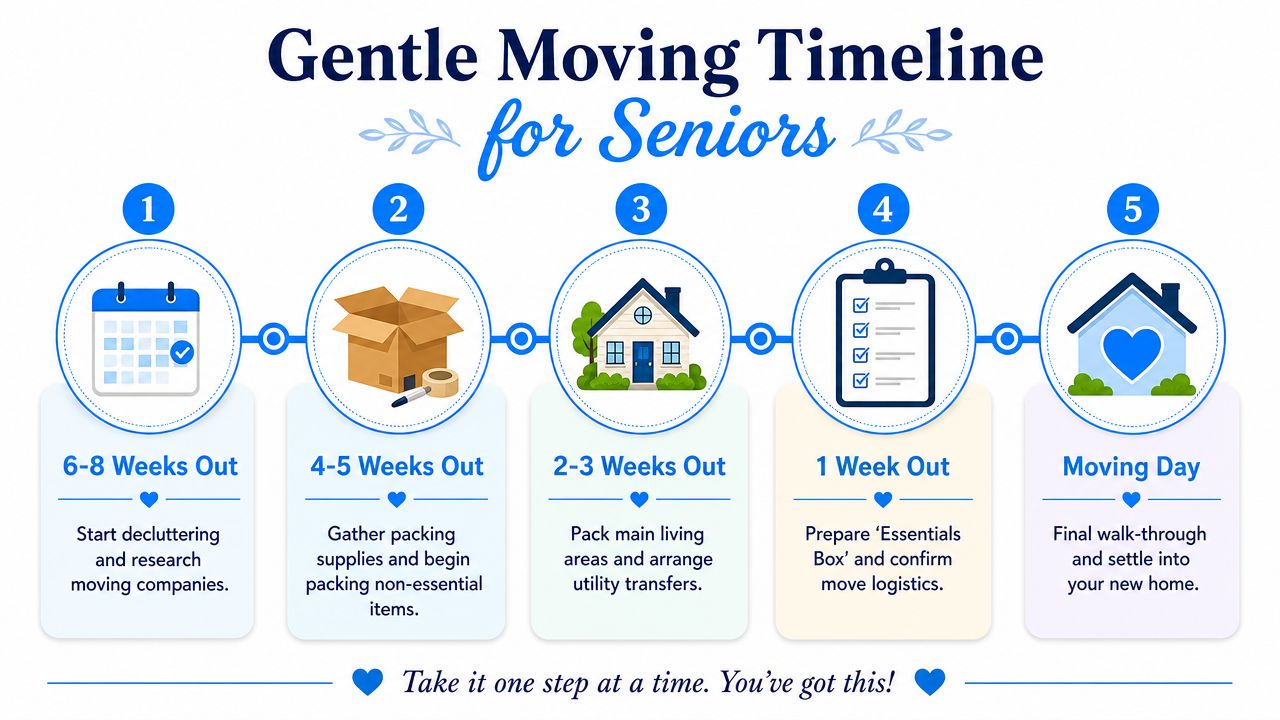
The move goes better when the calendar is settled before the first box is taped.
I have seen the same pattern across Ontario for years. A senior agrees to move, the family means well, and then three households start making plans at once. One person wants to pack the kitchen this weekend. Another is chasing paperwork. The senior is still deciding which armchair is coming. A gentle timeline stops that pileup and gives everyone one clear pace to follow.
Planning early matters for practical reasons, but it also protects energy and mood. Seniors usually do better with short work sessions, time to revisit decisions, and a written plan they can see. The National Institute on Aging recommends starting early, making task lists, and breaking the move into manageable steps in its advice on planning and preparing to move. That lines up with what works on real moving days.
Build the plan around the person, not just the date
Start with the move date, then work backward. Mark medical appointments, family availability, building rules, and rest days first. In Toronto condos, elevator bookings and loading windows often shape the whole week. In Durham Region, travel time between homes, storage units, and relatives' houses can slow everything down more than families expect.
A written checklist keeps decisions visible and prevents repeat conversations. If you want a ready-made framework, On The Move's moving checklist is a practical starting point. Families also do well with outside guidance for a stress-free move when emotions and logistics are both running high.
A workable weekly rhythm
A good timeline is usually quiet and boring. That is a compliment.
Use a steady rhythm like this:
- Week one: Confirm the move date, building access, and who is helping. Set up a folder for leases, contact numbers, receipts, and moving paperwork.
- Week two: Sort one low-stress storage area, such as a linen closet, hall cabinet, or spare shelf. Early wins matter.
- Week three: Pack items that are rarely used. Seasonal clothing, extra bedding, holiday decorations, and surplus kitchen items can usually leave first.
- Week four: Measure furniture and compare it to the new space. This step prevents last-minute arguments and wasted effort.
- Week five: Label boxes by room and purpose, not just by contents. "Bedroom, open first" is better than "miscellaneous."
- Final week: Keep daily items accessible, confirm arrival details, and prepare one clearly marked essentials box for the first 24 to 48 hours.
Leave gaps in the schedule. A slower morning, a medical appointment, or a hard decision about sentimental items should not throw off the whole plan.
Short sessions are safer. In most senior moves, 45 to 90 minutes of sorting or packing is plenty before concentration drops and aches start. If the family wants the move to feel calmer, this is one place where professional packing help makes a real difference. We can keep the schedule moving while the senior stays involved in decisions without having to stand, bend, carry, and problem-solve for hours.
Downsizing with Dignity and Purpose
Downsizing feels heavy when people frame it as getting rid of things. It becomes easier when it's treated as choosing what deserves a place in the next chapter.
Families often struggle here because practical needs and emotional needs pull in different directions. A daughter may want to clear space quickly. A parent may want to open every box from the basement and remember where it came from. Both reactions are normal. The answer is structure, not pressure.
Use four decision categories
Set up four clear groups:
- Keep
- Gift to family
- Donate or sell
- Discard
That simple framework prevents endless “maybe” piles.
| Item Category | Keep If… | Consider Parting With If… |
|---|---|---|
| Furniture | It fits the new home and will be used regularly | It won't fit, blocks mobility, or duplicates another piece |
| Clothing | It's worn often, fits well, and suits current routines | It hasn't been worn in a long time or no longer suits daily life |
| Kitchen items | It supports everyday meals and is easy to access | There are duplicates, rarely used gadgets, or oversized sets |
| Paper records | They are legal, medical, financial, or personally important | They are old duplicates, expired manuals, or unnecessary statements |
| Sentimental items | They hold strong meaning and can be displayed or safely stored | The memory matters more than the object itself |
If the senior is stuck, narrow the choice. Ask, “Would you want this in your new bedroom or living room?” That's often easier than asking, “Should we get rid of it?”
For families who need help thinking through the emotional side, this guidance for a stress-free move offers useful perspective on keeping the process respectful and manageable. Local readers may also find Pickering downsizing advice by On The Move helpful when planning for a smaller home.
Make sentimental items easier to sort
Sentimental belongings need a different approach from practical ones.
Try these methods:
- Photograph bulky keepsakes: A dining table, china cabinet, or workshop bench may not fit the new home, but the memory can still be preserved.
- Write down the story: Tape a short note to the back of an item or keep a notebook of family history connected to it.
- Choose a “legacy box”: Limit it to one or two containers for letters, albums, military items, jewellery, and cherished personal objects.
- Gift with intention: If a grandchild wants a clock, quilt, or tool set, hand it over while the senior can tell the story behind it.
Some items also need a practical exit plan. Broken furniture, worn mattresses, outdated electronics, and basement clutter can stall progress if they linger too long. In those cases, a combined moving and disposal plan helps, especially if you also need junk removal support arranged alongside the packing timeline.
Keep the stories, not always the volume.
Safely Packing Valuables and Medical Essentials
The hardest calls on moving day often happen in the first hour. A senior is tired, the truck is loading, and someone asks where the medications went, who has the hearing aid charger, or which box holds the health card. That confusion is preventable.
The safest approach is simple. Keep one small, clearly marked set of items out of the moving inventory and within reach at all times. In practice, I tell families to prepare two separate containers. One for medical and legal must-haves, and one for comfort items needed in the first 24 to 48 hours after arrival.

Build one true essentials box
This box stays with the senior, an adult child, or the person coordinating care. It does not go in the truck, and it does not get stacked with general boxes in the garage or lobby.
Pack these items first:
- Medications: Prescription bottles, pill organizer, pharmacy contact information, and a current written medication list
- Medical items: Glasses, hearing aids, dentures, mobility aid accessories, spare batteries, chargers, and any setup instructions
- Documents: Health card, photo ID, insurance papers, powers of attorney, hospital paperwork, and upcoming appointment details
- Daily-use basics: Toiletries, incontinence supplies if needed, sleepwear, slippers, a change of clothes, tissues, and a few familiar snacks
- Communication items: Phone, tablet, chargers, printed contact numbers, and written passwords if the senior relies on them
Keep this box small enough that one person can carry it safely. Once it gets oversized, important items disappear under extras that can wait.
Families dealing with walkers, lift chairs, hospital beds, or oxygen-related accessories often need a bit more planning. Affinity's medical equipment blog is a useful reference for preparing equipment for transport and setup.
Separate valuables from general packing
Jewellery, cash, passports, cheque books, family photos, and small heirlooms should be packed apart from household goods. In Toronto condos, I often see these items set down temporarily on a kitchen counter while elevators are being booked and movers are coming in and out. That is exactly when things get misplaced.
Use a small hard-sided case, document bag, or suitcase with a zipper. Label it for the responsible person, not by contents. "Daughter's car" is better than "Jewellery and papers."
For fragile keepsakes, use packing paper or bubble wrap and smaller cartons. Large boxes encourage overpacking, and overpacked boxes break more easily and are harder for older adults to handle safely. Clear labels also matter. "Dining room crystal" or "hall table framed photos" gives far better direction than "fragile."
A separate day-of bag also helps. If you're building that list now, these essential packing tips for movers can help you keep immediate-need items separate from boxes that can wait until tomorrow.
One last point matters more than families expect. Medical routines should be packed around timing, not around rooms. If a senior takes evening medication, uses a CPAP machine, or needs a walker for every transfer, those items are packed last and set up first. That is often the difference between a calm first night and a stressful one.
A quick visual walkthrough can help families decide what belongs close at hand and what can be packed away:
A Room-by-Room Packing Strategy for Seniors
A good packing plan starts where daily life will not be disrupted.
In practice, that usually means the spare room, linen closet, basement shelving, or a storage locker. In Whitby and Oshawa, I often see families begin in the basement because those items are already half out of the home mentally. In a Toronto condo, the better starting point is often a front hall closet, den, or locker, especially if building rules limit elevator booking times and boxes need to be staged carefully.

Start with rooms that ask the least emotionally
Low-use spaces are usually the easiest to finish without fatigue or second-guessing. They also give seniors time to adjust to the feeling of the move, which matters just as much as the boxes.
Pack these areas first:
- Guest rooms: extra bedding, spare lamps, books, and occasional furniture
- Storage spaces: closets, basement shelves, utility cupboards, and lockers
- Seasonal items: holiday décor, patio cushions, winter gear in summer, or summer hats in January
- Display pieces: decorative bowls, extra photo frames, and items already set aside for the next home
That early progress helps families see what is left, what still needs a decision, and what can safely stay in use until the final week.
Handle the kitchen by zones, not all at once
Kitchens tire people out because they mix heavy items, breakables, and daily-use supplies. Breaking the room into zones keeps the work manageable.
Start with rarely used cupboards, serving dishes, baking tools, and duplicate utensils. Leave the everyday set until the end. For heavy items like canned goods, dishes, or small appliances, use smaller boxes and fill gaps with packing paper so nothing shifts. The National Institute on Aging recommends reducing clutter and keeping walkways clear to lower fall risk at home, which applies during packing too, especially when boxes start collecting near counters and doorways on its home safety page.
A practical kitchen order looks like this:
- Pack special-occasion dishes and glassware first
- Box pantry overflow and unopened extras next
- Leave one mug, one plate, basic cutlery, a kettle, and simple food out for the last day or two
- Mark boxes by cabinet or zone, such as "upper left pantry" or "baking drawer," not just "kitchen"
That last point saves real frustration on unpacking day.
Keep the bedroom calm and functional
The bedroom should feel settled for as long as possible. Seniors sleep better and cope better when the room still works at the end of a tiring day.
Pack off-season clothes, extra linens, spare pillows, and décor first. Keep one dresser drawer usable and one closet section open until the last few days. Nightstand items should be packed carefully, with anything used at bedtime grouped together in one clearly labelled box or bag.
For shared decision-making, I usually tell families to sort the bedroom into three groups: still wearing, moving but not needed this week, and no longer needed. That keeps the process respectful and avoids turning one room into an all-day downsizing session.
Use the living room and office to reduce clutter early
Living rooms look simple, but they create some of the most common trip hazards during a move. Side tables get moved. Lamps go on the floor. Cords end up loose. Then the path to the bathroom or hallway gets tight.
For these spaces:
- Pack books in small boxes only
- Place remotes, chargers, and loose cords in labelled zipper bags
- Wrap framed photos and artwork individually
- Keep one clear walking route open at all times
- Stack packed boxes along one wall, never across a doorway or hall
Clear floors matter more than finishing fast.
Paperwork also tends to surface here. If a senior has mail, address books, calendars, or filing drawers in the living room or den, pack active papers separately from keepsakes and archive files. Mixing them creates extra work later.
Bathrooms and laundry rooms come last, but not all at once
These rooms stay in use right up to moving day, but parts of them can still be packed early. Extra towels, backup toiletries, unopened supplies, and seldom-used cleaning products can usually be boxed ahead of time.
Leave out only what supports the current routine. In senior moves, that often means one towel set, daily toiletries, continence supplies if needed, and a small cleaning kit for the final day. If the laundry room also serves as a storage area, clear the shelves early so the washer, dryer, and floor area stay accessible and safe.
Families who want to streamline your move with packing services often get the most value in these mixed-use rooms, because they take more judgment than people expect. The work is not hard because it is complicated. It is hard because it is tiring, repetitive, and easy to rush.
A room-by-room plan works best when each room is packed in stages, with comfort and safety protected all the way through.
Why Hiring Professional Packers is the Safest Choice
A senior move with stairs, narrow condo hallways, icy walkways, or a fast possession date can turn ordinary packing into a real safety risk. I have seen families do their best and still end up exhausted, sore, and making rushed choices late in the day. In Ontario, that pressure often gets worse when a move involves elevator bookings, building time windows, or winter weather in Toronto, Oshawa, Whitby, Ajax, or Pickering.
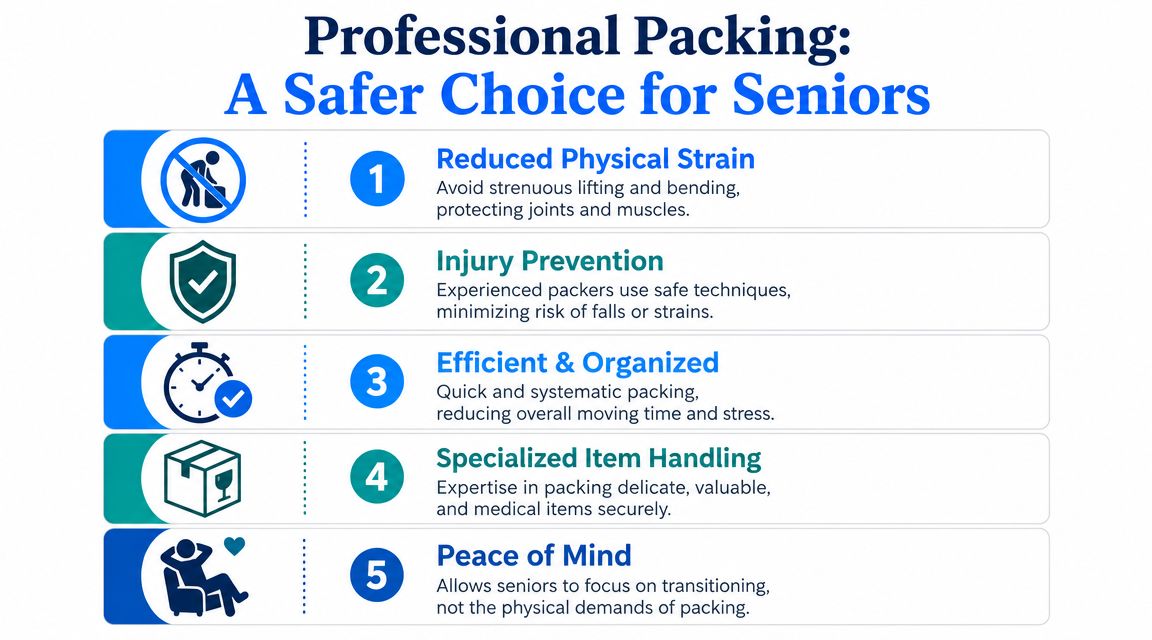
Professional packers reduce that strain by taking the physical work and the sequencing off the family's shoulders. Seniors can stay involved in decisions without being put in carrying, bending, or lifting roles. That matters because the goal is not only getting everything boxed. The goal is getting the senior to the next home safely, with their routine, medications, and comfort protected.
Safety matters more than saving a few hours
Good packers bring a system. They pack in a stable order, keep access routes clear, protect furniture properly, and label boxes so the first day in the new home feels manageable instead of chaotic.
That usually leads to:
- Less lifting and reaching for the senior
- Safer handling of heavy lamps, dishes, and framed items
- Better separation of daily-use items from storage items
- Fewer last-minute decisions made under stress
- An easier first night after arrival
There is also an emotional side families sometimes underestimate. Seniors often feel unsettled watching their home change room by room. An experienced packing crew works calmly, explains what is happening, and keeps the process orderly. That steady pace helps people feel included instead of overwhelmed.
Tight timelines raise the stakes
Short-notice moves happen often. A retirement residence space opens up. A home sells faster than expected. A hospital discharge changes the timeline. In condo buildings across Toronto and the Durham Region, one missed elevator booking or one poorly packed day can create problems that ripple through the whole move.
Professional help makes those moves more controlled. The team can coordinate packing order, set aside items for the first 24 hours, prepare fragile pieces for transport, and flag what should travel with the senior instead of on the truck. Families who want to streamline your move with packing services usually get the biggest benefit when time is short and the margin for error is small.
Hiring packers does cost more than doing everything yourself. That trade-off is real. For many senior moves, though, the cost is balanced by lower injury risk, less damage, fewer missed details, and far less stress on family members who are already managing a major life change.
Frequently Asked Questions About Senior Packing
Should seniors pack their own belongings or let family do it?
The best answer is usually shared responsibility. Seniors should stay involved in decisions about what to keep, gift, donate, and place close at hand. Family or professional movers should handle most lifting, bending, carrying, and stair work.
What should never be packed in the main moving load?
Keep medications, identification, legal papers, medical records, glasses, hearing aids, chargers, toiletries, and a change of clothes with the senior or a trusted family member. Those items should be available throughout the move.
How do you reduce stress when a move feels emotionally overwhelming?
Use shorter sessions. Pack one category or one small area at a time. Avoid forcing decisions late in the day when people are tired. It also helps to start with easy spaces first so the senior builds confidence before facing sentimental rooms.
What if the move needs to happen quickly?
Prioritise essentials, safety, and logistics. Pack daily-use items separately, clear walking paths, and decide quickly what will not be moved. In a condo or apartment setting, confirm building access and elevator rules as early as possible.
If you want experienced, compassionate help with packing help for seniors in Oshawa, Whitby, Ajax, Pickering, Toronto, or nearby communities, On The Move Moving & Junk Removal makes the process easier. Their team is fully insured and bonded, offers affordable rates, free supplies, no truck or fuel fees, and they pay the tax. With 15+ years of experience, they help seniors and families book a safer, calmer move without the usual chaos. Get a free quote, call today, or book your move with a team that understands both the work and the people behind it.
CTA
On The Move Moving & Junk Removal – Trusted Movers Across Durham Region & the GTA
Local • Long-Distance • Residential • Commercial • Seniors • Junk Removal
Fully Insured • No Truck or Fuel Fees • Free Supplies • 15+ Years Experience
📞 Call or Text: 289-987-2434 🌐 https://onthemove1.ca
📍 Serving up to 250 km from Hampton, including:
Pickering, Ajax, Whitby, Oshawa, Bowmanville, Courtice, Clarington,
Toronto, Scarborough, Markham, Vaughan, Richmond Hill, Mississauga, Brampton and more.
📚 Read Our Moving & Junk Removal Blogs https://onthemove1.ca/blog/
⭐ Read Our Google Reviews https://maps.app.goo.gl/zJW11oWfodw37fFb7