
Moving to a new home in Hampton, Oshawa, or anywhere across Ontario is an exciting milestone. But let's be honest, the thought of packing up your entire life can be overwhelming. Where do you even begin? As the #1 choice for movers in the Durham Region and the GTA, On The Move Moving & Junk Removal is here to help. With over 15 years of experience, we've compiled the ultimate guide of packing tips for moving to make your transition seamless. We've seen it all, and we know what works.
This isn't just another generic checklist. This is a practical, step-by-step plan designed for Ontario homeowners and renters. We'll cover everything from the crucial first step of decluttering (and how our junk removal services can help!) to creating a 'first night' essentials box that will feel like a lifesaver on moving day. For pet owners, planning a stress-free move requires special consideration for your feline companions; find detailed guidance on moving across country with cats to ensure their comfort and safety.
Our goal is to make your transition as smooth and efficient as possible. With our fully insured & bonded team, you get affordable rates, free supplies, no truck or fuel fees, and we even pay the tax. Whether you're moving to a condo in Toronto or a family home in Bowmanville, this guide provides the actionable advice you need. Let's get you packed and ready for your new beginning, the smart way.
1. Declutter Before You Pack
One of the most effective packing tips for moving is to declutter before you even think about taping up a box. This practice involves sorting through all your belongings and deciding what to keep, donate, sell, or discard. It’s the single best way to reduce the volume of items you need to pack, move, and unpack, which directly lowers your moving costs and saves significant time.

Why It's The Most Important First Step
Moving less stuff is always easier and more affordable. For families in Oshawa downsizing to a condo, decluttering is essential to make sure furniture fits the new space. Apartment dwellers in Whitby can save on moving expenses by getting rid of unused kitchen gadgets and clothes. For a commercial move in Ajax, decluttering old files and outdated equipment streamlines the entire relocation process, minimizing business downtime.
How to Declutter Effectively
To make this process organized and less overwhelming, follow these actionable tips:
- Start Early: Begin decluttering at least 4-6 weeks before your move date. This gives you plenty of time without feeling rushed.
- Use the Four-Box Method: Set up four distinct areas or boxes labelled: Keep, Donate, Sell, and Discard. As you go through each room, sort every item into one of these categories.
- Be Realistic: Follow the one-year rule. If you haven't used an item in the past year, it's a strong candidate for donation or selling. Be honest with yourself about what you truly need.
- Handle Unwanted Items: For items you can’t sell or donate, such as old mattresses or broken furniture, On The Move Moving & Junk Removal simplifies disposal with our professional junk removal services.
2. Invest in Quality Packing Supplies
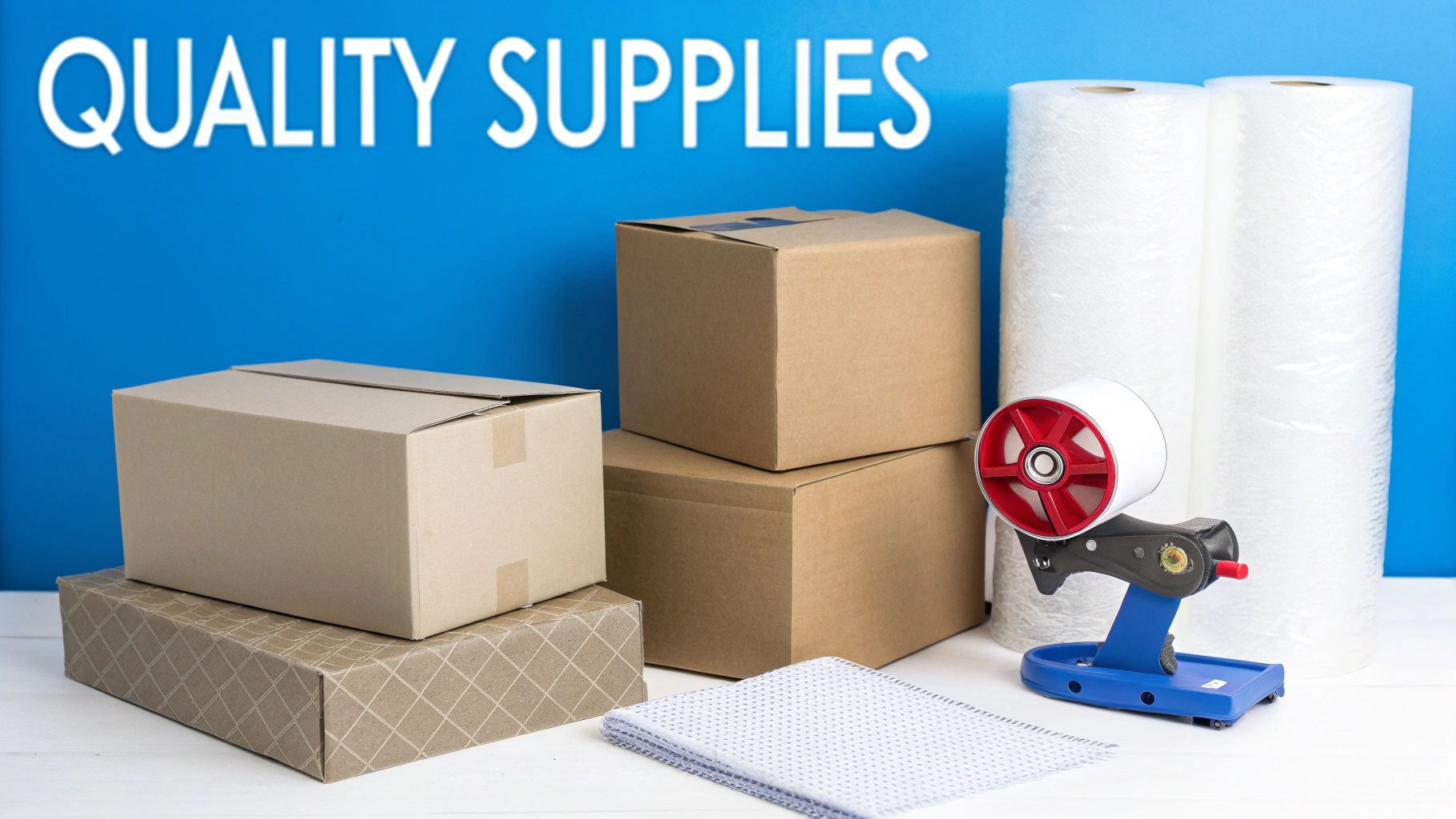
One of the most overlooked yet crucial packing tips for moving is to invest in high-quality packing supplies. Using appropriate, sturdy materials ensures your belongings arrive safely at your new location. This includes strong cardboard boxes in various sizes, durable packing tape, bubble wrap, packing paper, and protective foam. These prevent damage to everything from furniture and electronics to dishes and other valuables during transit.
Why It's a Non-Negotiable Step
Flimsy, second-hand boxes and weak tape are a recipe for disaster. For Toronto-area families, wardrobe boxes preserve clothing and save significant unpacking time. Commercial relocations in Pickering benefit immensely from heavy-duty boxes that can handle office equipment without collapsing. For a long-distance move across Ontario, specialty dish boxes with partition inserts are essential to protect fine china and glassware, ensuring they arrive in one piece.
How to Source and Use Supplies Effectively
To ensure a smooth and damage-free move, follow these organized tips for your packing materials:
- Source Smartly: At On The Move Moving & Junk Removal, we offer our clients free supplies, removing the guesswork and extra cost from the equation.
- Use Specialty Boxes: Don't put your expensive flat-screen TV in a regular box. Use specially designed boxes for valuable and fragile items like electronics, dishes, and artwork for maximum protection.
- Reinforce for Strength: Always reinforce the bottom of every box with extra strips of packing tape. This simple step prevents the bottom from giving way when the box is lifted.
- Don't Skimp on Protection: Use ample packing paper, bubble wrap, or moving blankets to fill empty spaces in boxes. This prevents items from shifting and breaking during transport. For professional assistance, explore our expert packing and unpacking services.
3. Use the Room-by-Room Packing Strategy
One of the most organized and efficient packing tips for moving is to adopt a room-by-room strategy. This approach involves focusing all your efforts on completely packing one room before moving on to the next. This method creates a systematic workflow that makes both packing and unpacking far less chaotic.
Why It's a Superior Organizational Method
A room-by-room approach prevents the common moving-day scramble of wondering where things belong. For Whitby families, this means the kids' bedroom boxes go directly to their new rooms, making their transition smoother. For a commercial move in Ajax, it allows for departments like accounting or operations to be packed and set up sequentially, ensuring a more organized relocation and less business disruption. This strategy is also ideal for condo moves in Toronto, where limited space requires a methodical unpacking process.
How to Implement a Room-by-Room Strategy
To execute this plan effectively and keep your move organized, follow these practical steps:
- Start with Less-Used Rooms: Begin packing rooms you use infrequently, such as guest bedrooms, formal dining rooms, or storage areas. This gets a significant portion of the work done without disrupting your daily life.
- Assign Colour or Number Codes: Designate a specific colour or number for each room. Apply matching labels or coloured tape to every box from that room. This creates a quick visual reference for movers, ensuring boxes land in the correct space at your new home.
- Save Essentials for Last: Pack your most-used rooms, like the kitchen, primary bathroom, and master bedroom, in the final days leading up to your move. This keeps essential items accessible for as long as possible.
- Create a Master Inventory: Keep a simple notebook or a digital list that tracks each numbered box and its general contents. This inventory is invaluable if you need to find a specific item quickly after the move.
4. Label Boxes Clearly and Consistently
Proper labelling is a non-negotiable step in an organized move and one of the most effective packing tips for moving. This practice involves clearly writing the destination room, a general summary of contents, and any handling instructions on each box. A consistent system helps everyone, from your family to our professional movers, place boxes in the correct rooms, making the unpacking process exponentially faster and less stressful.

Why Proper Labelling is Key
Imagine arriving at your new home only to face a sea of identical brown boxes with no clue what’s inside. Clear labelling prevents this chaos. For families in Oshawa, colour-coding boxes by room (e.g., blue for bedrooms, red for the kitchen) helps children find their belongings quickly. For a commercial move in Ajax, a numbered system with a corresponding digital spreadsheet ensures every piece of equipment is accounted for, minimizing operational downtime. Toronto condo residents find that detailed labels help movers prioritize boxes for small spaces and tight elevator trips.
How to Label Effectively
To make your labelling system work for you, follow these actionable tips:
- Label Multiple Sides: Write on the top and at least two sides of every box. This ensures you can identify the contents even when boxes are stacked.
- Be Specific but Brief: Instead of just "Kitchen," write "Kitchen – Pots & Pans" or "Kitchen – Small Appliances." For fragile items, clearly mark FRAGILE and indicate which way is up with arrows.
- Use a Consistent System: Choose one method and stick with it. Whether you use permanent markers, coloured tape for each room, or a numbered inventory list, consistency is key for an efficient unpacking process.
- Create a "First Night" Box: Designate one or two boxes with essentials like toiletries, medications, chargers, basic tools, and a change of clothes. Label it clearly as OPEN FIRST so you can find it immediately.
5. Pack Heavy Items in Small Boxes, Light Items in Large Boxes
One of the most practical packing tips for moving is to match box size to item weight. This simple yet crucial strategy involves placing heavy, dense items into small boxes and lightweight, bulky items into larger ones. This method ensures that no single box becomes too heavy to lift safely, preventing injuries and making the loading and unloading process much smoother.
Why This Strategy is So Important
Proper weight distribution in your moving boxes is fundamental to a safe and efficient move. For homeowners in Bowmanville packing up a library, using small boxes for books prevents them from becoming unliftable. Similarly, a family in Courtice can pack duvets, pillows, and linens into large boxes without worrying about them breaking or being too heavy. This approach protects both your belongings and the backs of everyone involved in the move.
How to Pack by Weight Effectively
To master this technique and streamline your packing, follow these actionable tips:
- Aim for a Manageable Weight: As a rule of thumb, keep the weight of any packed box under 23 kg (about 50 pounds). This makes them easier and safer for one person to handle.
- Use Small Boxes for Heavy Items: Small boxes are perfect for dense items like books, tools, canned goods, dishes, and small kitchen appliances.
- Use Large Boxes for Light Items: Reserve your largest boxes for bulky but light belongings. This includes pillows, blankets, towels, clothing, and lampshades.
- Don't Underfill Large Boxes: While you shouldn't overstuff them, ensure large boxes are filled to the top with light items to prevent them from being crushed when stacked. Use packing paper or linens to fill any empty space.
6. Keep an Essentials Box or 'First Night' Kit
One of the most practical packing tips for moving is to prepare a dedicated essentials box or ‘first-night’ kit. This is a clearly labelled box or bag containing everything you’ll need immediately upon arriving at your new home. By setting these crucial items aside, you can avoid the stress of rummaging through countless boxes just to find a toothbrush or phone charger after a long moving day.
Why It's a Moving Day Lifesaver
Having immediate access to necessities turns a potentially chaotic first night into a comfortable transition. For families in Whitby, an essentials kit with snacks, pyjamas, and a favourite toy can make all the difference for tired children. Professionals relocating to a new condo in Toronto can ensure their work clothes, laptop, and important documents are readily available for the next morning. It simplifies your first 24 hours, allowing you to settle in with ease.
How to Prepare Your Essentials Kit
To build a useful and organized first-night kit, follow these actionable tips:
- Pack It Last: Keep this box separate from the main load. The goal is to pack it last so it can be the first thing off the truck, or even better, transport it in your personal vehicle.
- Label It Clearly: Mark the box on all sides with a bold, unmissable label like “ESSENTIALS – OPEN FIRST” or “DO NOT MOVE.” This ensures movers know its importance.
- Include Key Categories: Organize your kit with items from all necessary areas:
- Personal: Toiletries, prescription medications, a change of clothes for everyone, and pyjamas.
- Kitchen: A few plates, cups, utensils, paper towels, a can opener, and instant coffee or tea.
- Comfort: Bedding, pillows, or sleeping bags to ensure a good first night's sleep.
- Critical Items: Phone chargers, a small toolkit (screwdriver, pliers), important documents, and contact information for your moving company and utilities.
- Customize for Your Needs: Add items specific to your household, such as pet food and bowls, children's comfort items, or baby supplies. To get a complete checklist, you can learn more about what to pack in your moving day survival kit.
7. Wrap and Protect Furniture and Electronics
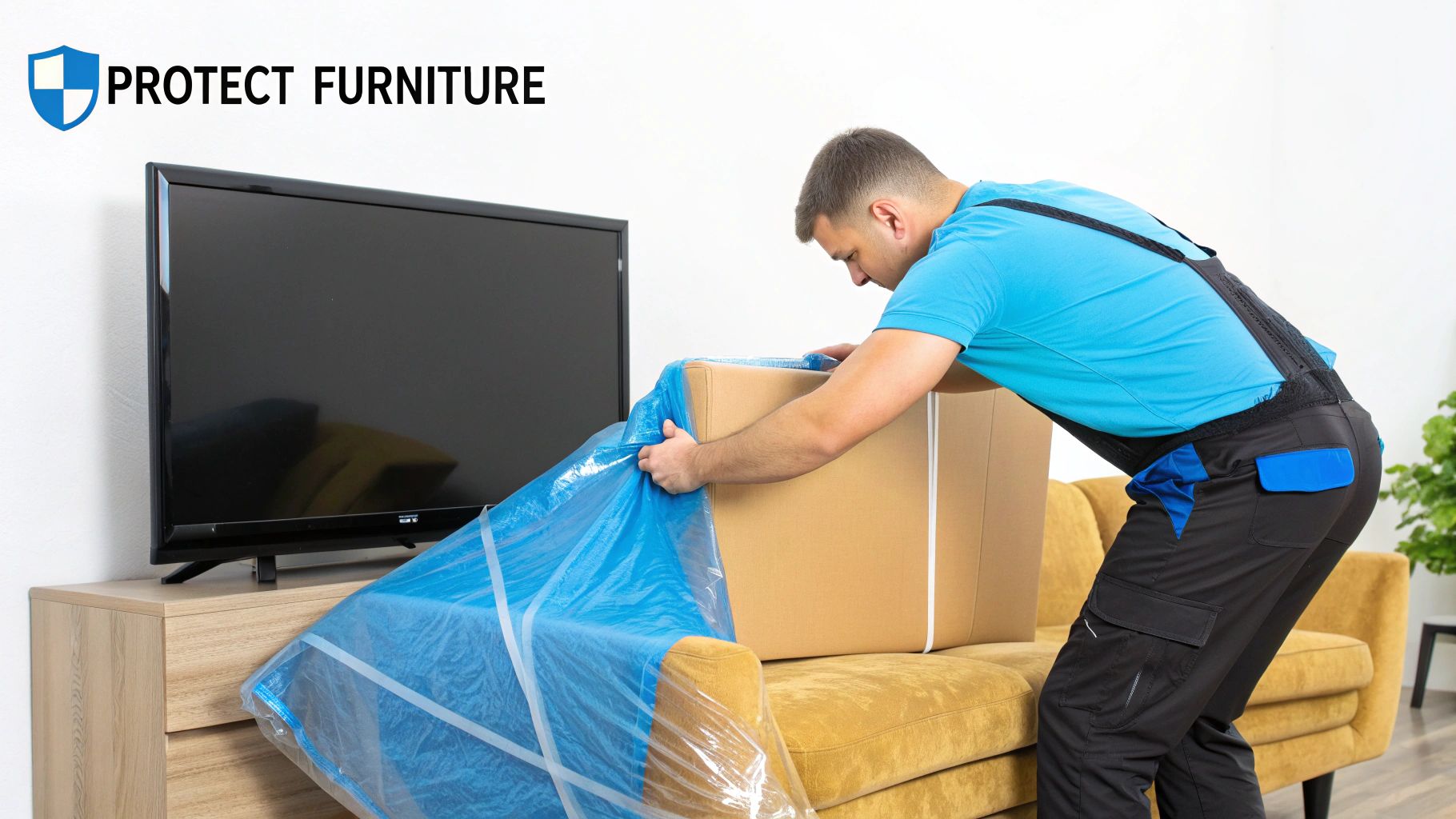
Properly wrapping your furniture and electronics is a non-negotiable step in the moving process. This crucial task involves using the right materials and techniques to create a protective barrier around your most valuable and bulky items, shielding them from scratches, dents, moisture, and impact during transit. It's one of the most important packing tips for moving to ensure everything arrives at your new home in the same condition it left.
Why It's a Critical Step
Your furniture and electronics are often significant investments. For a family moving from a large house in Bowmanville, proper padding is essential to navigate staircases without damaging walls or the furniture itself. When moving into a high-rise condo in Toronto, navigating tight corners and elevators requires items to be thoroughly protected. For a long-distance move across Ontario, vibrations and shifting can cause damage, making secure wrapping an absolute must for everything from TVs to antique dressers.
How to Wrap and Protect Effectively
Follow these professional techniques to ensure your belongings are move-ready:
- Gather the Right Supplies: You'll need moving blankets, bubble wrap, plastic stretch wrap, packing tape, and cardboard corner protectors. On The Move Moving & Junk Removal offers free supplies to make this step easier.
- Prepare Your Items: If possible, disassemble furniture by removing legs, shelves, and knobs. Place all small parts in a labelled bag and tape it securely to the main piece. Take photos of electronic setups before unplugging cables.
- Wrap Systematically: Use moving blankets for large wooden or metal surfaces. Secure the blankets with plastic stretch wrap pulled tightly. For upholstered pieces, a waterproof couch slipcover can provide an extra layer of defence against moisture and dirt.
- Protect Screens and Glass: Use bubble wrap and cardboard corner protectors for TV screens, monitors, mirrors, and glass tabletops. Never place tape directly on electronic screens or finished wood surfaces.
8. Create an Inventory System or Moving Checklist
Maintaining a detailed inventory of your packed items is one of the most organized packing tips for moving. This system involves creating a master list of everything you've packed, tracking the contents of each box, and checking items off as they arrive at your new home. It provides accountability, helps you locate specific items quickly, and offers crucial documentation if anything goes missing or gets damaged.
Why It's a Crucial Organizational Tool
An inventory system eliminates the stress of not knowing where your essential items are. For a family moving within Oshawa, a spreadsheet can track which of the 50 boxes contains the coffee maker for that first morning. For a commercial relocation in Ajax, a detailed inventory ensures every piece of computer equipment is accounted for, minimizing business downtime. Condo residents in Toronto can use an app to document high-value items, which is essential for both insurance purposes and efficient unpacking in a smaller space.
How to Create an Effective Inventory
To implement a system that simplifies your move, follow these actionable tips:
- Assign Unique Numbers: Give each box a unique number (e.g., 1, 2, 3…) and write it clearly on multiple sides. This number is the key to your entire system.
- Use a Master List: Create a spreadsheet (Google Sheets or Excel) or use a dedicated moving app. Create columns for the box number, the destination room (e.g., "Kitchen," "Main Bedroom"), and a brief description of the contents.
- Be Specific: Instead of just writing "kitchen stuff," list key items like "Toaster, Blender, Cutlery Tray." Note fragile items or special handling requirements directly on your list.
- Check Off Upon Arrival: As movers bring boxes into your new home, check each number off your master list. This confirms everything has arrived safely. For an even more detailed approach, consider creating a comprehensive moving checklist for your Ontario move to stay on top of all your tasks.
- Keep It With You: Do not pack your inventory list. Keep the physical copy or your digital device with you on moving day for easy access.
9. Pack Strategically by Seasonality and Frequency of Use
One of the most efficient packing tips for moving is to organize your boxes based on how often you use the items inside. This strategic approach involves packing your least-used belongings first (like seasonal decor or off-season clothing) and saving everyday essentials for the very last boxes. This method dramatically simplifies the unpacking process, allowing you to access what you need immediately without digging through dozens of boxes.
Why It's a Smarter Way to Pack
This approach ensures you can function comfortably in your new home from day one. For a family in Bowmanville moving in July, packing winter coats and holiday decorations first clears space and reduces clutter. A senior moving into a smaller condo in Courtice can pack hobby supplies and sentimental items they don't need daily well in advance, making the final days before the move less chaotic and more manageable.
How to Pack by Frequency
To implement this system effectively, categorize your belongings before you start. This simple organization will make settling into your new Ontario home a breeze.
- Start with Non-Essentials: Begin by packing items you rarely use. This includes seasonal items (holiday decorations, winter gear for a summer move), specialty sports equipment, and books you've already read.
- Create Priority Levels: Mentally or physically sort items into categories: Rarely Used, Monthly, Weekly, and Daily. Pack in that order, from rarely used to daily.
- Label with Detail: Mark boxes clearly not just with the room name, but also with its priority. For example, "Kitchen – Low Priority (Specialty Bakeware)" or "Bedroom – High Priority (Everyday Linens)."
- Prepare an Essentials Box: Your final box should contain everything you'll need for the first 24 hours in your new home, such as toiletries, medications, a change of clothes, phone chargers, and basic kitchen supplies. Keep this box with you or have our team load it last on the truck so it's the first one off.
10. Use Proper Lifting Techniques and Ask for Help
One of the most overlooked yet crucial packing tips for moving is prioritizing your physical safety. Protecting your health involves using proper lifting techniques to prevent strain and knowing when to ask for help. This means bending at your knees, keeping your back straight, and holding boxes close to your body. It is the best way to avoid injuries that could complicate your moving day and cause long-term pain.
Why It's a Non-Negotiable Step
A simple muscle strain or back injury can turn an exciting move into a painful and stressful ordeal. For seniors in Oshawa or Pickering, hiring professional movers like On The Move Moving & Junk Removal is a smart investment to avoid physical exertion. Similarly, families in Whitby with young children can benefit from professional help to manage the heavy lifting safely and efficiently. For commercial moves in Toronto, arranging for insured movers ensures employee safety and compliance with workplace health standards.
How to Move and Lift Safely
To keep your move injury-free and smooth, integrate these safety practices into your packing and moving day:
- Lift Correctly: Always bend at the knees, not at your waist. Keep your back straight, engage your core muscles, and lift with your legs.
- Keep Items Close: Hold heavy boxes close to your body to maintain your centre of gravity and reduce strain on your back and arms.
- Know Your Limits: Don’t try to be a hero. Ask for help when moving anything over 12-14 kg. Better yet, let our professional team handle it.
- Use Equipment: Utilize furniture dollies, hand trucks, and sliders for heavy items like couches, fridges, and dressers. This is a standard practice for all professional movers.
- Take Breaks: Avoid fatigue by taking frequent breaks. Most injuries happen when you're tired and your form gets sloppy. Stay hydrated and rest when needed.
Top 10 Packing Tips Comparison
| Strategy | 🔄 Implementation Complexity | ⚡ Resource Requirements | 📊 Expected Outcomes | 💡 Ideal Use Cases | ⭐ Key Advantages |
|---|---|---|---|---|---|
| Declutter Before Packing | 🔄 Medium — time + emotional effort | ⚡ Low — mainly time, donation/disposal logistics | 📊 Lower volume, reduced costs, faster packing/unpacking | 💡 Downsizing, long-distance moves, condo-to-condo relocations | ⭐⭐⭐ Cost & time savings; cleaner start |
| Invest in Quality Packing Supplies | 🔄 Low–Medium — sourcing/procurement | ⚡ Medium — purchase cost and storage space | 📊 Fewer damaged items; safer transit | 💡 Fragile/valuable items, long-distance, professional moves | ⭐⭐⭐ Improved protection; reusable materials |
| Room-by-Room Packing Strategy | 🔄 Medium — requires discipline and sequencing | ⚡ Low — labeling supplies and time | 📊 Systematic progress; simplified unpacking | 💡 Families, multi-room homes, office/department moves | ⭐⭐⭐ Clear workflow; easier placement |
| Label Boxes Clearly and Consistently | 🔄 Low — consistent application needed | ⚡ Low — markers, tape, stickers | 📊 Faster unpacking; accurate placement; easier tracking | 💡 Any move, especially multi-room or storage | ⭐⭐⭐ Speeds unloading; reduces confusion |
| Pack Heavy Items in Small Boxes, Light Items in Large Boxes | 🔄 Low — planning box allocation | ⚡ Medium — varied box sizes needed | 📊 Safer handling; prevents box failure; efficient loading | 💡 Kitchen/book-heavy moves, offices with files | ⭐⭐⭐ Injury reduction; better load stability |
| Keep an Essentials Box / "First Night" Kit | 🔄 Low — simple final packing step | ⚡ Low — one box/bag | 📊 Immediate access to necessities; reduced first-night stress | 💡 All moves; families with children; short-notice arrivals | ⭐⭐⭐ Convenience; stress reduction |
| Wrap and Protect Furniture and Electronics | 🔄 Medium–High — skill and time to wrap properly | ⚡ High — pads, blankets, wrap, corner protectors | 📊 Minimized damage; protected valuables | 💡 Long-distance moves, high-value items, condo moves | ⭐⭐⭐ Strong damage prevention |
| Create an Inventory System or Moving Checklist | 🔄 Medium — time-consuming to maintain | ⚡ Low–Medium — spreadsheet/app and time | 📊 Accountability; easier claims and item location | 💡 Commercial moves, multi-stop moves, storage situations | ⭐⭐⭐ Documentation & traceability |
| Pack Strategically by Seasonality & Frequency of Use | 🔄 Medium — requires thoughtful categorization | ⚡ Low — labeling/time | 📊 Prioritized unpacking; immediate access to frequently used items | 💡 Seasonal moves, families, staged unpacking | ⭐⭐ Efficient settling; logical unpack order |
| Use Proper Lifting Techniques and Ask for Help | 🔄 Low–Medium — training and coordination | ⚡ Medium — dollies, helpers, or professional movers | 📊 Reduced injury risk; smoother loading/unloading | 💡 Heavy-item moves, seniors, office relocations | ⭐⭐⭐ Safety-first; improves efficiency |
Ready to Make Your Move? Let Ontario's #1 Movers Handle the Rest
Navigating the complexities of a move can feel overwhelming, but a strategic approach to packing is your greatest asset. From decluttering your home to sealing the final box, each step is a crucial part of a larger puzzle. Mastering these packing tips for moving isn't just about protecting your belongings; it’s about reclaiming your time, reducing stress, and setting the stage for a smooth transition into your new home or office.
Think of packing as the foundation of your entire relocation. When you invest in quality supplies, you’re not just buying boxes and tape; you’re purchasing peace of mind. When you adopt a room-by-room strategy and create a detailed inventory, you’re building a clear, actionable roadmap for moving day. These are proactive measures that transform a potentially chaotic experience into a controlled, manageable project.
When to Call in the Professionals
While these packing tips for moving empower you to handle much of the process yourself, it's also wise to recognize when professional help is the best course of action. If you're facing a tight deadline, have numerous fragile or high-value items, or simply want to focus on other aspects of your transition, bringing in a professional packing service is a smart investment. A team of experts can accomplish in hours what might take you days or weeks, all while ensuring maximum protection for your belongings.
This is where your local moving partners at On The Move Moving & Junk Removal can make all the difference. As Ontario's #1 movers, we see firsthand how professional packing services can alleviate the biggest pressures of a move. We provide not just the muscle but the meticulous care and expertise needed to pack an entire household or office efficiently and safely. Our services are designed to be flexible, whether you need us to pack your entire home, just the kitchen, or handle delicate items like artwork and electronics. With our fully insured & bonded team, you can rest easy knowing your move is in the most capable hands in the Durham Region and beyond.
Your #1 Choice for Moving in Hampton & Across Ontario
Ready to turn these packing tips into a seamless reality? Let the trusted professionals at On The Move Moving & Junk Removal take the weight off your shoulders. We offer expert packing services, junk removal, and comprehensive moving solutions with affordable rates, free supplies, and no hidden truck or fuel fees—we even pay the tax. Contact us today for a free, no-obligation quote and discover why we are the #1 choice for movers in Hampton, Oshawa, and across Ontario.
On The Move Moving & Junk Removal – Trusted Movers Across Durham Region & the GTA
Local • Long-Distance • Residential • Commercial • Seniors • Junk Removal
Fully Insured • No Truck or Fuel Fees • Free Supplies • 15+ Years Experience
📞 Call or Text: 289-987-2434 🌐 https://onthemove1.ca
📍 Serving up to 250 km from Hampton, including:
Pickering, Ajax, Whitby, Oshawa, Bowmanville, Courtice, Clarington,
Toronto, Scarborough, Markham, Vaughan, Richmond Hill, Mississauga, Brampton and more.
📚 Read Our Moving & Junk Removal Blogs https://onthemove1.ca/blog/
⭐ Read Our Google Reviews https://maps.app.goo.gl/zJW11oWfodw37fFb7