
Moving usually starts the same way. You open one closet, then another, and realise how much life has accumulated in your home. Kitchen cupboards are full. The basement has mystery bins. The linen closet somehow contains sports gear, batteries, and old phone chargers. Then you look at the calendar and understand that all of it has to be sorted, wrapped, labelled, moved, and set up again.
That's where packing and unpacking services stop being a nice extra and start looking like a practical decision.
A professional packing crew doesn't just put things into boxes. They bring the supplies, protect breakables properly, label by room and priority, and pack in a sequence that makes unloading and unpacking easier at the other end. That matters whether you're leaving a family home in Whitby, moving into a condo in Toronto, or trying to coordinate a last-minute apartment move in Ajax.
A good move also involves the details around the boxes. If you're renting, this is often the point where cleaning gets left to the very end, so it helps to review a practical guide on move out cleans for renters before handover day arrives. And if your move includes a downtown condo, experienced Toronto movers, movers in Toronto can make a major difference when booking elevators, handling loading areas, and keeping the day on schedule.
Introduction
The biggest mistake people make is assuming packing is simple if they start early enough. In real homes, packing takes longer than expected because it isn't one job. It's hundreds of small decisions. What gets wrapped first, what stays out until the last night, what needs a stronger box, and what should never be mixed together.
Professional packing services create order from that mess. The standard service usually includes bringing materials, packing room by room, wrapping fragile items, sealing boxes, and labelling everything clearly enough that unpacking doesn't turn into a scavenger hunt. Some crews also note priority boxes so your kettle, coffee maker, bedding, and bathroom items are easy to find on day one.
That structure saves time, but it also reduces stress in a very direct way. You're not spending evenings hunting for tape, redoing boxes that are too heavy, or wondering whether your dishes are properly protected. You're handing the most time-consuming part of the move to people who do it every day.
What Do Professional Packing Services Actually Include
Professional packing is a system. When the crew arrives, they should already know whether the job is full packing, partial packing, or fragile-only. They should also bring the materials needed for the type of home and the contents inside it.
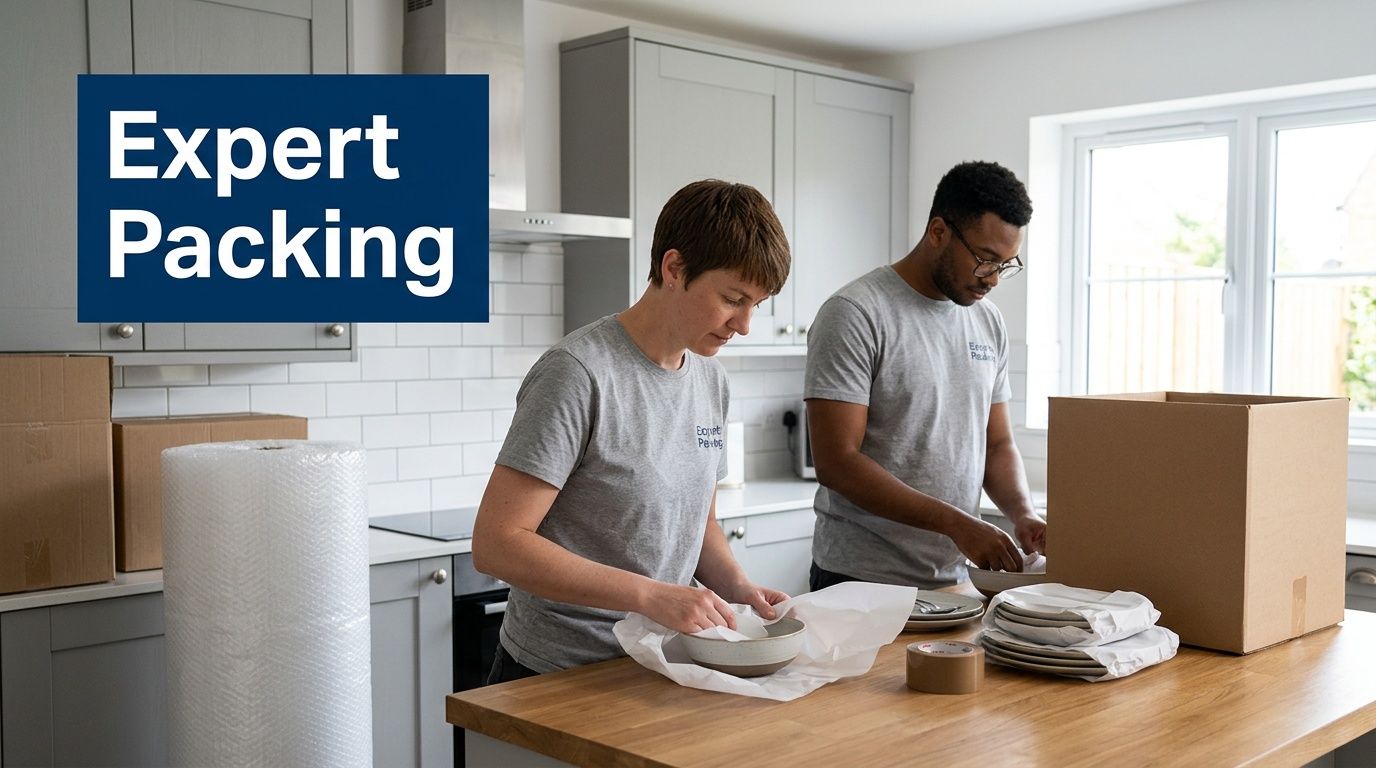
What a standard packing service covers
Most professional packing and unpacking services include:
- Boxes in multiple sizes for books, linens, décor, pantry items, and mixed household contents
- Packing paper and bubble wrap for dishes, glassware, frames, and small breakables
- Tape and labels so every box is sealed properly and marked by room
- Furniture preparation such as wrapping loose parts, bundling hardware, and protecting vulnerable surfaces
- Room-by-room workflow so the home stays organised instead of becoming one big pile of half-packed boxes
The difference between trained packing and DIY packing usually shows up in the details. Books belong in smaller boxes so they don't become too heavy. Lamps need their shades handled separately. Kitchen items have to be layered, not dumped together. Electronics need cords grouped and labelled in a way that still makes sense a few days later.
Practical rule: If a box is hard to lift safely when it's half full, it's the wrong box for that item category.
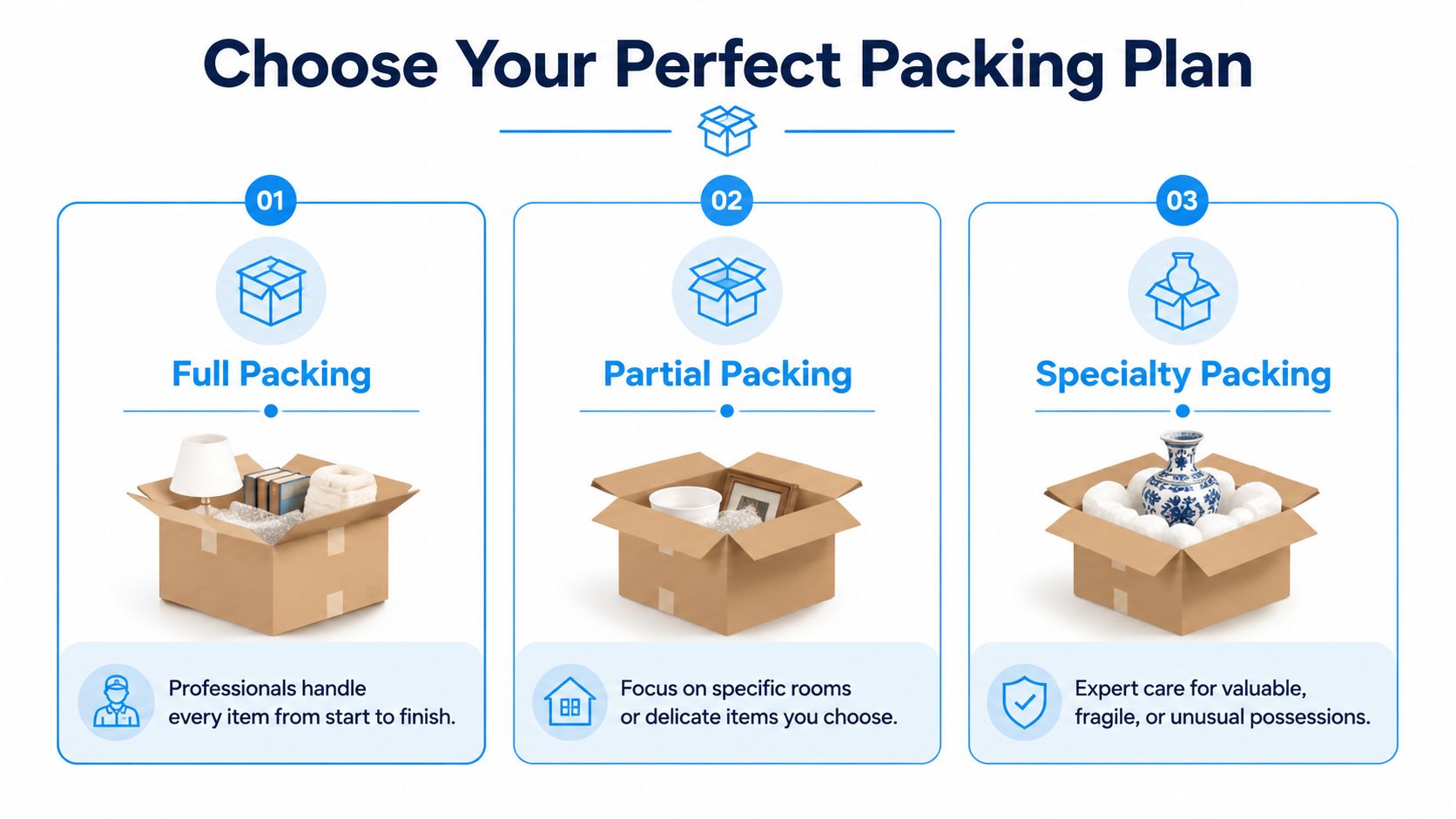
Full, partial, and fragile-only packing
Not every move needs the same level of help. That's why service choice matters.
Full packing is best when time is tight, the home is large, or the move is already complex. A Whitby family moving a full house often chooses this because trying to self-pack while managing kids, work, and school schedules quickly becomes overwhelming.
Partial packing works well when you want help only where it counts. A couple in Pickering might pack clothing and décor themselves, then hire pros for the kitchen, artwork, and home office.
Fragile-only packing is the targeted option. If you're comfortable boxing up towels and books but want someone else to handle stemware, mirrors, electronics, and collectibles, this is the fit.
For anyone building their moving timeline, a simple 10 step stress-free moving plan can help you map out what to pack yourself and what to leave to the crew.
What doesn't belong in mover-packed boxes
A professional crew can pack most of a home, but some items should stay with you:
- Personal documents like passports, wills, and financial records
- Medication and daily medical items you may need immediately
- Jewellery and sentimental valuables you'd rather transport personally
- Perishables and hazardous items that aren't suitable for standard moving transport
That separation makes the move smoother. Your essentials stay accessible, and the crew can focus on everything else.
Choosing Your Service Level Full Partial and Specialty Packing
Picking the right service level is really about matching the move to your time, budget, and tolerance for disruption. A small condo move in Toronto has different pressure points than a larger house move in Oshawa or Bowmanville.
Full packing when you want the move off your plate
Full packing means the crew handles virtually everything in the home except the items you've set aside. This is the option that makes sense for busy households, long to-do lists, and moves where there's no room for delay.
It's especially useful for:
- Family homes with packed kitchens, storage rooms, garages, and children's rooms
- Time-sensitive closings where packing has to happen quickly and in order
- Winter moves in Ontario, when shorter daylight and messy conditions make delays more frustrating
This option also suits people who'd rather protect their energy for the move itself than spend days wrapping dishes and hunting for more boxes.
Partial packing when you want control and support
Partial packing is often the most practical middle ground. You handle the simpler items and leave the high-risk or tedious areas to the crew.
That often means:
- Kitchen packing
- Glassware and barware
- Artwork and mirrors
- Home office equipment
- Basement storage
- Last-minute overflow the night before the move
This approach works well for condo and apartment moves because access windows are tighter, hallways are narrower, and there's less room to stack boxes while figuring things out.
If you're comparing options and want to find professional packing and moving support that fits your move instead of forcing you into one package, partial service is usually the first place to look.
Specialty packing for fragile or awkward items
Some moves don't need full-house packing, but they do need skill. Specialty packing focuses on items that are expensive, sentimental, fragile, oversized, or difficult to stabilise.
Examples include:
- Artwork and mirrors that need edge protection and careful boxing
- Electronics that benefit from labelled cords and component grouping
- Heirlooms and collectibles that can't be replaced if packed poorly
- Lamps, décor, and breakable shelving pieces that shift easily in transit
The right packing plan isn't always the biggest one. It's the one that removes your highest-risk tasks first.
A note on seniors and downsizers
This is one area many generic moving guides miss. Seniors and downsizers often need more than a basic packing crew. They may need practical help deciding what moves, what gets donated, what gets assembled in the new home, and what needs to be placed for easier day-to-day access.
That's why unpacking support can be essential for someone moving from a larger house to a smaller condo. The gap in current advice often overlooks these needs, even though professional unpacking can be especially important for people with mobility concerns or a major reduction in living space, as noted by A Place For Everything.
How to choose between the three
A simple decision filter helps:
| Service level | Best for | Main trade-off |
|---|---|---|
| Full packing | Large homes, busy families, complex timelines | Highest upfront cost, lowest personal workload |
| Partial packing | Budget-conscious moves, condos, selective help | You still need to prep and pack some rooms |
| Specialty packing | Fragile items, valuables, awkward pieces | Best for targeted protection, not full-home relief |
The wrong choice is usually obvious in hindsight. People either buy too little help and scramble at the end, or they assume they need full packing when a focused partial service would have solved the underlying problem.
The Real Cost of Packing and Unpacking Services in Ontario
Understanding the cost of packing services in Ontario starts with the details that change the job.
A one-bedroom condo in Toronto with a booked elevator, a long walk from the loading area, and strict move hours is priced differently than a family home in Whitby with easy driveway access and a garage full of storage bins. That difference is where many online guides fall short. They talk about “clear quotes” but skip the factors that affect what you pay.
What changes the price
Packing and unpacking are usually priced around labour time, crew size, and materials. In practice, five things tend to drive the total.
Home size and volume
A neat apartment with limited storage takes less time than a detached home with a basement, attic, garage, and packed kitchen.How much you want packed
Full packing means the crew handles most or all rooms. Partial packing keeps the cost lower by focusing on the rooms that cause the most delay or damage, such as kitchens, breakables, and wall décor.Access and building rules
Toronto condos often involve elevator bookings, loading dock limits, narrow service hallways, and tight time windows. Those jobs need tighter scheduling than a house move in Ajax or Oshawa.What you own
Books, dishes, glassware, artwork, electronics, and small décor pieces take more time than folded clothing or clearly labelled storage totes.Whether unpacking is part of the job
Unpacking adds labour, but it can shorten the disruption after move day, especially for families trying to get a kitchen, bedrooms, and bathrooms usable right away.
Sample Ontario packing estimates
The responsible way to talk about cost is with ranges and examples, not flat promises. A quote should reflect the actual home, the amount of packing required, and the access conditions on both ends.
| Home Size | Estimated Packing Time (2 Packers) | Estimated Cost Range |
|---|---|---|
| 1-bedroom apartment | Half day to full day | Varies based on volume, access, and service level |
| 2-bedroom condo or townhome | Full day | Varies based on stairs, elevator booking, and fragile items |
| 3-bedroom suburban house | Full day to longer | Varies based on storage areas, kitchen size, and furniture prep |
| 4-bedroom family home | Longer, often with staged packing | Varies based on volume, timeline, and unpacking scope |
For a more useful starting point, an Ontario moving cost calculator helps you frame the estimate around your actual move instead of a generic average.
What a transparent quote should explain
A proper quote should show where the time and materials are going. If it only gives you a total, you still do not know much.
Initial request
You share the home size, destination, preferred dates, and whether you want full packing, partial packing, specialty packing, unpacking, or a combination.Access review
The company confirms stairs, elevators, parking distance, loading restrictions, and anything else that could slow the crew down.Scope confirmation
You identify high-priority rooms, fragile items, valuables, and any items you plan to pack yourself.Cost breakdown
The quote should explain labour, packing materials, specialty cartons if needed, and any added services such as unpacking or debris removal.Booking details
You should receive a clear arrival window and a service plan that matches the quote.
A low number without detail often becomes an expensive move by the end of the day.
What saves money and what often does not
Packing everything yourself can save money on a smaller, simple move if you have the time, the right materials, and enough lead time to stay organized. It tends to cost more than expected when people underestimate the kitchen, leave the packing for the last two nights, or use weak boxes that need to be repacked on moving day.
That is why partial packing is often the best value. It lets homeowners keep control of the easy items while handing off the slow, fragile, or frustrating parts to trained packers.
Unpacking has a similar trade-off. Skipping it lowers the invoice, but many families end up spending several extra days working around unopened boxes, rebuying household basics they cannot find, and losing usable space in the new home. For a busy Toronto condo move or a Whitby family move with kids, that added disruption has a cost too.
The On The Move Packing Process From Start to Finish
A well-run packing job feels organized from the first call to the last bundle of paper removed. If you are leaving a Toronto condo with a booked elevator window or packing up a family home in Whitby before school pickup, the process matters as much as the boxes.
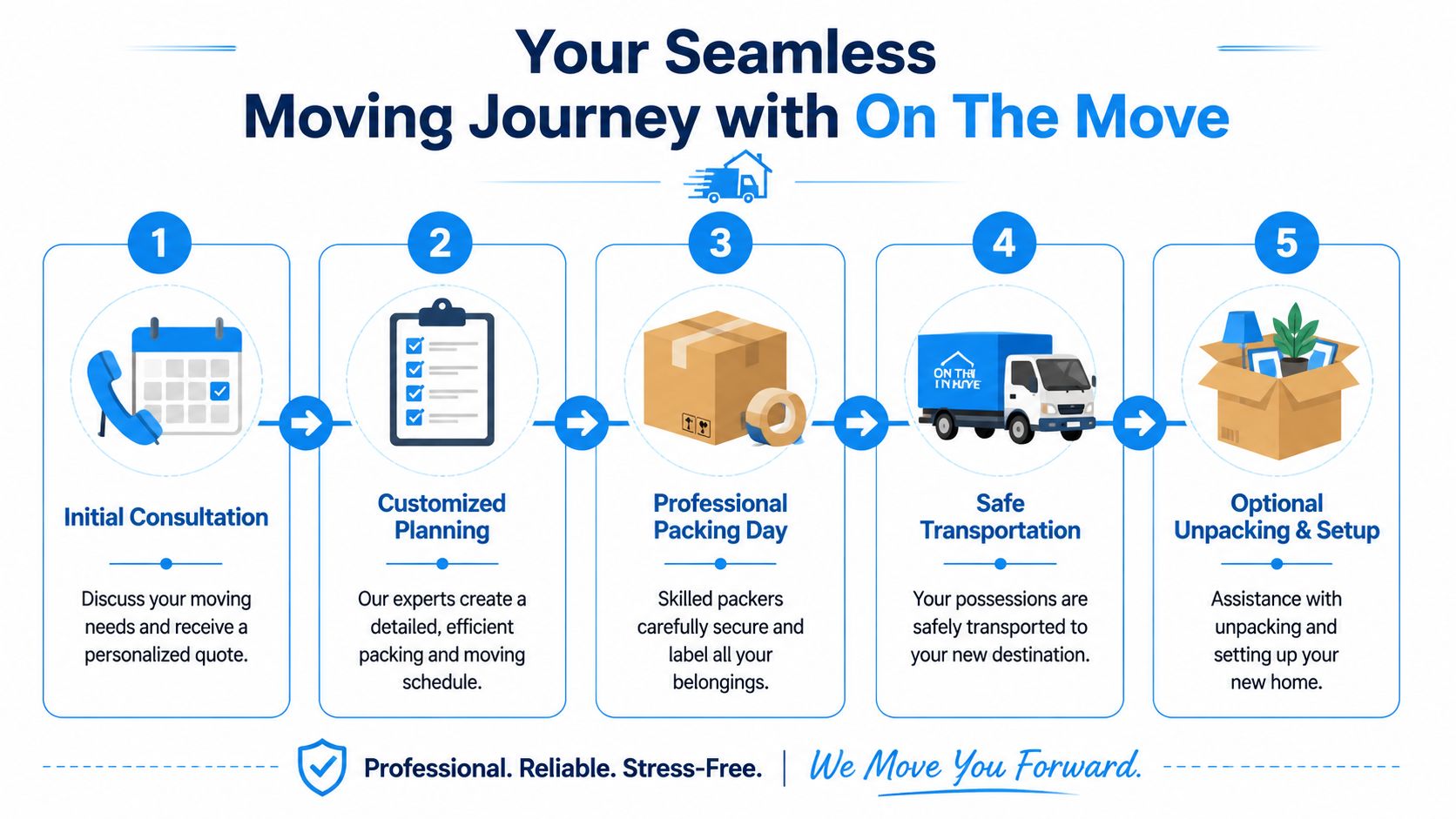
Step one and two
It starts with a clear scope of work. The crew needs to know what is being packed, what is staying with you, whether there are fragile or high-value items, and what kind of access the home allows. A one-bedroom condo can take longer than a larger house if the building has strict elevator times, long walks from loading, or limited parking.
Then the schedule gets locked in. That includes the packing date, arrival window, service level, and any building requirements that need to be handled ahead of time. In Ontario, that planning step is where good companies earn their keep. Toronto condo rules, downtown traffic, and narrow moving windows can turn a simple packing day into a rushed one if nobody plans properly.
Step three and four
Before the crew arrives, set aside the items you do not want packed. Keep medications, passports, jewelry, keys, chargers, daily paperwork, and anything you need for the first night with you. A quick declutter also helps. There is no sense paying to wrap and label items already headed for donation or disposal.
On packing day, the first job is a walkthrough. The crew confirms priorities room by room, checks for items that need extra protection, and flags anything that should travel separately. From there, packing usually starts with storage areas, décor, spare bedrooms, and other lower-use spaces. Kitchens, bathrooms, and last-day essentials are normally packed later so the home still works while the crew is there.
Step five and six
Good packing is methodical. Boxes are built properly, weight is balanced, breakables are wrapped to suit the item, and labels are written for the destination room instead of vague notes that create confusion later. That sounds basic, but it saves real time at unload and cuts down on repacking, crushed cartons, and misplaced essentials.
The same principle carries into unpacking. The job is faster and less stressful when cartons are grouped properly from the start and clearly marked for the new home. Families settling into a Whitby house, seniors downsizing, and condo owners trying to clear a hallway before building deadlines all benefit from that kind of order.
A move feels finished when the boxes are gone and the home works, not when the truck pulls away.
Final cleanup and disposal
Cleanup is part of the process, not an afterthought. Once key rooms are unpacked and furniture is in place, the remaining paper, cartons, and tape should be gathered and removed so you can use the space right away.
That matters more than people expect. After a long move, nobody wants a dining room full of flattened boxes or a condo entry blocked by packing debris. A professional packing process ends with a livable home, not a pile of materials waiting for the weekend.
Beyond the Boxes The Magic of Professional Unpacking Services
You get the keys, the truck is unloaded, and by 7 p.m. the condo in Toronto or the house in Whitby is full of boxes. That is the point where many moves start to drag. Professional unpacking shortens that stretch and gets the home working sooner.

What unpacking actually does
A quality unpacking crew does more than cut tape. They open cartons by room, put everyday items where you will use them, reassemble key furniture, make beds, and clear out the packing material as the job moves along. In practical terms, that means you can shower, feed the kids, find your coffee maker, and sleep in a proper bed the first night instead of living around piles of boxes for a week.
That has real value in Ontario moves where access windows are tight and the day runs long. In a downtown condo, getting boxes emptied and stacked quickly helps keep hallways clear and avoids friction with building rules. In a family home, it means the kitchen and bathrooms can be set up before everyone hits a wall.
The trade-off is straightforward. Unpacking is an added service, so it costs more than delivery alone. For many clients, the time saved and the faster setup are worth it, especially after a larger move, a senior downsizing move, or a next-day return to work.
A practical unpacking checklist before the crew arrives
If you've booked unpacking help, a little direction makes the service more useful:
- Choose the first rooms to finish such as the kitchen, primary bedroom, child's room, and main bathroom
- Confirm furniture placement early so the crew can unpack into the right layout the first time
- Keep your essentials box separate with medications, documents, toiletries, chargers, and first-night items
- Set aside anything you do not want unpacked such as donations, returns, or items headed to storage
- Define the finish line whether that means beds assembled, cupboards loaded, or packing materials removed
Small decisions made early save a lot of stop-and-start later.
Here's a visual look at how organised unpacking changes the feel of a move:
Why debris removal matters
Unpacking creates a surprising amount of waste. Paper, tape, box inserts, wardrobe bars, and flattened cartons pile up fast, especially in condos and townhomes where space is already tight.
Removing that material as the crew works changes how the home feels by the time they finish. Rooms open up faster. Floors are safer to walk on. You are not left with a weekend cleanup project after paying for help in the first place.
The best unpacking jobs reduce decision fatigue and leave you with a home that works on day one.
How to Prepare for Your Professional Packers
The easiest way to improve packing day is to do less, not more. You don't need to pre-pack the whole house “to help.” What you need is clarity. When the crew can walk in, understand what stays, what goes, and what needs extra care, the day moves much better.

The prep checklist that actually helps
Declutter first
Don't pay to pack things you already know you'll donate, toss, or recycle. Even one pass through closets, cupboards, and storage rooms makes a difference.Build an essentials box
Keep daily medications, documents, chargers, toiletries, basic tools, pet items, and one change of clothes where you can reach them.Separate personal transport items
Jewellery, passports, laptops you need immediately, and sentimental valuables should travel with you.Clear pathways
Make sure hallways, stairs, and room entries are easy to move through. This reduces slowdowns and helps protect your walls and floors.Decide where furniture goes
If possible, know where the main pieces belong at the new home. That avoids unnecessary shifting later.Speak up about fragile and high-value items
Don't assume the crew will guess. Point them out during the walkthrough.
What not to do
A few habits create more problems than they solve:
- Don't mix keep and don't-move items together in the same room
- Don't overfill your own boxes before the crew arrives
- Don't leave building paperwork for the last minute if you're in a condo
- Don't disappear completely during the initial walkthrough if decisions still need to be made
If you want more detailed planning help before moving day, this page with expert residential moving advice is a useful next step.
Why the company you hire matters
Preparation helps, but the crew still matters most. Experienced movers work faster because they don't waste motion. They know how to protect awkward furniture, how to label for efficient unloading, and how to keep the home from turning into chaos halfway through the job.
Local experience in Ontario is essential for a smooth move. Crews operating throughout Whitby, Ajax, Pickering, Oshawa, and Toronto encounter practical challenges constantly. Snow, slush, narrow condo loading bays, older stairwells, tight townhome turns, and buildings with strict elevator bookings all influence how the day must be managed.
A reliable company also gives customers the basics they should expect. Fully insured and bonded service. Affordable rates. Free supplies. No truck or fuel fees. A company that pays the tax. And the kind of experience that only comes from doing this work year after year in Durham Region and the GTA.
Why Choose On The Move for Your Packing and Unpacking Needs
A good packing crew should make the move feel more organized within the first hour. In a Whitby family home, that usually means a clear room-by-room plan and fewer last-minute decisions. In a Toronto condo, it often means working around elevator windows, loading rules, and tight hallways without turning the day into a scramble.
That matters because many customers are not just buying boxes and labour. They are buying time, fewer breakage risks, and one point of contact from pack day to setup at the new place. Analysts at Mordor Intelligence note that full-service moving continues to take a large share of the market, which matches what we see across Durham Region. People want the job handled properly, especially when the move involves fragile items, condo restrictions, or a house full of furniture that has to be ready on a deadline.
What sets On The Move apart is not a long list of promises. It is how the work is scoped and carried out in Ontario homes.
We handle practical details that often get missed in generic moving advice. That includes choosing the right level of packing for the job, planning around building access, and giving customers clear expectations about what is included, what takes extra time, and where specialty packing makes sense. A condo move in downtown Toronto has different pressure points than a detached home in Oshawa, and the packing plan should reflect that.
Customers also benefit from using one team for packing, moving, and unpacking instead of splitting the work between multiple companies. Fewer handoffs usually means fewer mistakes, clearer accountability, and a faster setup at the destination. That is a real advantage when you are trying to get a kitchen working on day one or settle children into bedrooms without digging through mixed boxes for two nights.
If you want a mover, not just packers, choose a company that understands local buildings, local timing pressures, and the actual cost of getting the job wrong. That is the difference between a move that drags on and one that stays under control.
Frequently Asked Questions About Packing Services
How long does it take to pack a home
It depends on the home size, how full it is, and whether you're booking full or partial service. A smaller apartment may be packed in part of a day, while a larger family home can take a full day or longer. The most accurate answer comes from a quote based on your layout, contents, and access conditions.
Do I need to be there while the packers work
You should be available at the start for the walkthrough and for any questions about priority items, fragile pieces, or what stays behind. After that, many customers stay nearby rather than in the crew's way. What matters most is that someone can make decisions if needed.
Can unpackers place items into cupboards and closets
Yes, if unpacking and setup are part of the service booked. That's one of the biggest benefits of professional unpacking. Instead of boxes sitting in each room for days, the home starts working immediately.
What items should I keep with me instead of having packed
Keep medications, passports, legal and financial documents, jewellery, personal electronics you need right away, and sentimental valuables with you. Hazardous materials and perishables should also be handled separately.
What if I have other home service questions during the move
Moves often overlap with flooring work, painting, cleaning, and repairs. If you like reviewing service details before booking, a well-organised page of Frequently asked questions is a good example of the kind of clarity you should expect from any home service provider.
Conclusion and Your Next Steps
Packing your own move can work. It just doesn't work well for every home, every schedule, or every type of item. Professional packing and unpacking services save time, protect belongings, and make the entire move feel more controlled from the first box to the final setup.
If you're moving anywhere in Durham Region, Toronto, or across Ontario, the smartest next step is to get a clear quote based on your actual home, building access, and service needs. That gives you real numbers, real options, and a plan you can trust.
Get Your Free Packing & Moving Quote Today!
If you're comparing movers, focus on the details that affect your day and your budget. Clear pricing. Fully insured and bonded crews. Free supplies. No truck or fuel fees. We Pay the Tax. And local experience handling condo moves, family homes, office moves, seniors, and junk removal across Durham Region and the GTA.
For homeowners, renters, and businesses looking at securing the best value moving service, the easiest next step is to request a quote through this page on securing the best value moving service.
On The Move Moving & Junk Removal – Trusted Movers Across Durham Region & the GTA
Local • Long-Distance • Residential • Commercial • Seniors • Junk Removal
Fully Insured • No Truck or Fuel Fees • Free Supplies • 15+ Years Experience
📞 Call or Text: 289-987-2434 🌐 https://onthemove1.ca
📍 Serving up to 250 km from Hampton, including:
Pickering, Ajax, Whitby, Oshawa, Bowmanville, Courtice, Clarington,
Toronto, Scarborough, Markham, Vaughan, Richmond Hill, Mississauga, Brampton and more.
📚 Read Our Moving & Junk Removal Blogs https://onthemove1.ca/blog/
⭐ Read Our Google Reviews https://maps.app.goo.gl/zJW11oWfodw37fFb7
When you want a move that feels organised from the first packed box to the last piece of debris removed, contact On The Move Moving & Junk Removal. Call or text today to get a free quote and book a packing and moving plan that fits your home, your timeline, and your budget.